
Tree Roots in Clay and Cast-Iron Laterals: Oak, Sycamore and Pepper Roots in LA
Los Angeles Plumbing Pros Blog — 30 Oct 2026
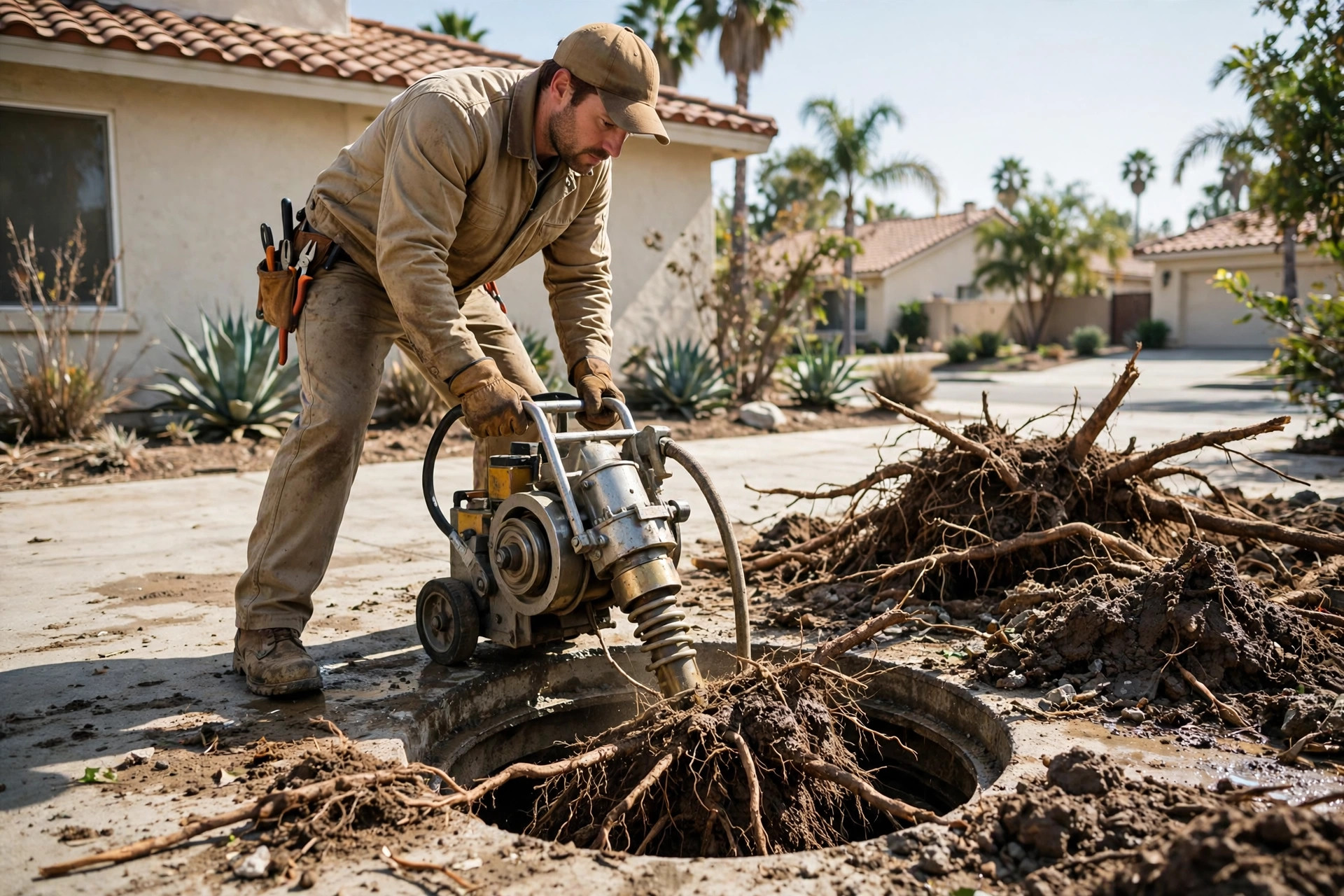
Los Angeles shade trees are beautiful, and their roots are relentless. In clay and cast-iron laterals, a hairline joint is an invitation, and the first backup is often the last warning.
How roots find a sewer lateral
A sewer lateral is the pipe that carries waste from a house to the city main, and in much of Los Angeles that pipe is old clay or cast iron. Clay laterals were built in short sections joined with mortar or rubber gaskets, and cast-iron laterals were joined with hubs and oakum. Both systems develop small gaps as the ground moves, as joints age, and as seismic activity shifts rigid pipe. A tree root does not need a large opening. A fine root hair can enter a hairline gap, and once inside it finds water, nutrients, and a warm, protected space. It thickens, branches, and eventually forms a root mass that catches paper, grease, and solids.
The backup pattern that points to roots
Root backups rarely start with a single clogged toilet. They start with slow drains across the house, gurgling in a tub when a toilet flushes, and a main-line backup that returns after a plunger or a chemical cleaner seems to help. That pattern matters, because a root mass is not a soft clog. It is a physical obstruction that catches waste, and clearing the waste without cutting the roots leaves the obstruction in place. If backups return every few months, especially in a home with mature trees and an old lateral, roots should be at the top of the list.
A sewer camera inspection is the step that turns a guess into a diagnosis. The camera shows the pipe material, the joint condition, the root mass, and whether the pipe is cracked, offset, or collapsed. That matters because the fix for a root mass in a sound clay pipe is different from the fix for a collapsed cast-iron section. Cutting roots without a camera can clear a line today and miss a break that will cause a backup next month. A camera also shows how far the roots extend, which determines whether a rooter, a lining, or a replacement is the honest recommendation.
Rooter, lining, or replacement: what fits when
A rooter with a cutting head can clear a root mass and restore flow, and for a pipe that is otherwise sound it can be a practical maintenance step. It does not repair the joint that let roots in, so roots will return. The interval depends on the tree, the pipe, and the season, but many homeowners need rooter work every year or two once roots have found a lateral. That is a cost and a disruption to plan for, not a one-time fix to forget.
Trenchless lining or pipe bursting can seal joints and create a new pipe inside or in place of the old lateral, without digging a trench across a yard. That is attractive where landscaping, a driveway, or a large tree would make excavation costly. It is not right for every pipe. A collapsed section, a severe offset, or a lateral with no access may still need excavation. The camera, the pipe condition, and the location of the damage decide the method, not a preference for trenchless on its own. A reputable recommendation will show you the camera footage and explain why the chosen method fits that specific pipe.
Frequently asked questions
Will cutting roots kill the tree?
No. A rooter cuts roots inside the pipe, not the tree itself. The tree will regrow roots toward water, which is why roots return unless the joint is sealed or the pipe is replaced.
How often do roots return after a rooter?
It varies by tree and pipe, but many Los Angeles homes with old clay or cast-iron laterals need rooter work every one to two years once roots have entered.
Is trenchless replacement always better than digging?
Not always. Trenchless is excellent for joint and lining work, but a collapsed or severely offset pipe may still need excavation. The camera inspection decides.
Related service
Call Los Angeles Plumbing Pros
If you are seeing the signs in this post, describe what you see, where it is, and when it started. A technician will talk through the next step before any work starts.