
Toilet Repair and Installation in Los Angeles: Running, Rocking, Leaking, and Weak Flushes
Los Angeles Plumbing Pros Blog — 30 Oct 2026
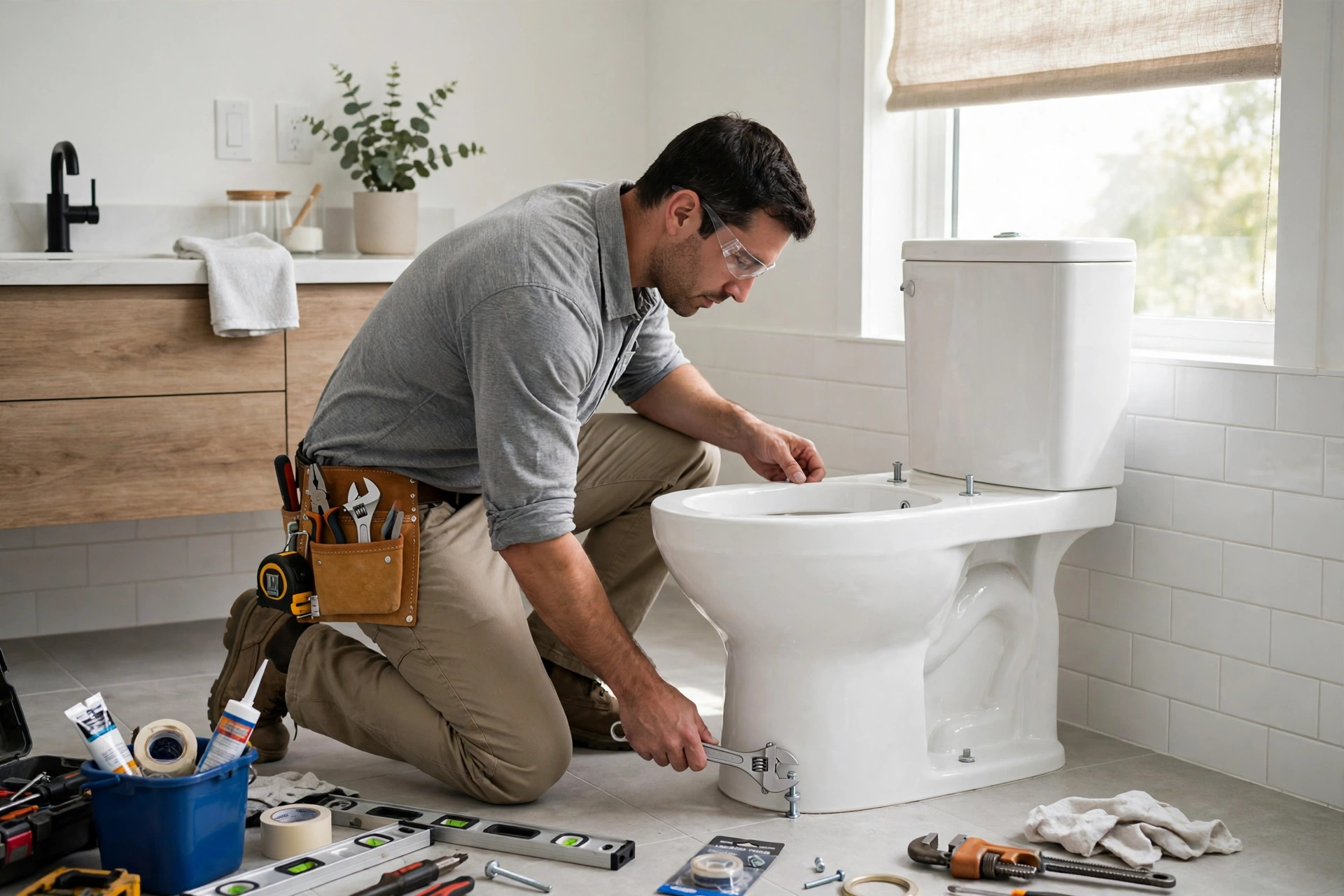
A toilet looks simple until it stops working properly. A running toilet that never quite shuts off, a weak flush that leaves waste behind, a base that rocks, or a damp patch on the floor can each point to a different part of the same small system: the supply line and shutoff, the fill valve, the flapper or flush valve, the bowl and trap, the wax ring and flange at the floor, and the drain beyond. In Los Angeles, that system also lives in hard water, in older buildings, and in homes where pressure and age change how long each part lasts.
This post explains how a toilet works in a Los Angeles home, why local water and housing cause the problems they do, what signs mean in different rooms and building types, how a problem is diagnosed without guessing, and when repair makes sense versus replacement. It also covers what to check before calling, how to prevent the next failure, and how the answer changes from a hillside house to an older apartment in Santa Monica or Culver City.
How a toilet works in a Los Angeles home
When you flush, water stored in the tank rushes through the flush valve into the bowl, creating a siphon that carries waste through the trap and into the drain. As the tank empties, the flapper or flush valve seal drops back into place, the fill valve opens, and the tank refills to a set level while a small stream refills the bowl to its normal water line. The whole cycle depends on the right water level, a seal that closes fully, and a drain that can carry the flush away without resistance. If any one of those is off, the toilet will run, flush weakly, clog, or leak, even though the porcelain itself looks fine.
The parts that fail most often are also the parts that move or sit in water all the time. A flapper made of rubber or silicone hardens, warps, or collects mineral scale and no longer seals, so water leaks from tank to bowl and the fill valve tops the tank up again and again. A fill valve can wear, stick, or become noisy as sediment and scale build up, especially in Los Angeles hard water. The wax ring under the base, which seals the toilet to the floor flange and the drain, can compress, shift, or fail if the toilet rocks, if the flange is damaged, or if the floor has moved slightly. None of these parts is expensive on its own, but each one affects the others, which is why a running toilet and a rocking base are sometimes symptoms of the same underlying movement or wear.
Why Los Angeles water and housing cause toilet problems
Los Angeles water, commonly 200 to 400-plus parts per million of hardness and over 12 grains per gallon in Glendale, leaves scale inside tanks, on fill valves, and around flush valve seals. That scale does not just look chalky. It changes how a flapper seats, how a fill valve shuts off, and how much water actually reaches the bowl during a flush. A toilet in a very hard water area can develop a slow tank-to-bowl leak months earlier than the same toilet in soft water, and the leak is often silent: the only sign is a fill valve that cycles briefly at night or a water bill that creeps up without an obvious cause.
Housing age and type change the pattern again. Homes built between 1948 and 1965 often have older supply lines, angle stops that no longer shut off cleanly, and cast iron or older drain piping that is more prone to internal roughness and partial blockage. Hillside homes can run at pressure over 80 PSI, and high pressure makes fill valves noisy, shortens their life, and can cause a toilet to run or hammer after a flush. Older apartments in Santa Monica and Culver City, with shared walls and shared drain stacks, add a building dimension: a toilet problem in one unit can show up as gurgling or slow drainage in a neighbour's bathroom, and a stack problem can make a single toilet look faulty when the drain beyond it is the real issue. Slab-on-grade homes in parts of the Los Angeles basin face a different risk, where a leaking wax ring can dampen flooring and, if ignored, damage the subfloor and the unit below in a multi-storey building.
Signs by room and area
In the bathroom itself, listen first. A toilet that runs for a few seconds every few minutes, a fill valve that hisses or takes a long time to shut off, and a flush that sounds strong but leaves paper behind all point to different parts. A rocking base, even a slight one, is a warning about the wax ring and flange, not just a comfort issue, because movement breaks the seal and lets water escape under the toilet. Water at the base after a flush, a soft or discoloured patch in flooring near the toilet, or a musty smell that does not clear with cleaning all suggest a seal leak that should not be left to dry on its own.
Outside the bathroom, signs can be more telling. A damp patch on the ceiling below a second-floor bathroom, a stain on a shared wall in an apartment, or a neighbour reporting water in their bathroom ceiling after you flush all point to a leak at the base, the supply line, or the drain connection, and they need attention before flooring or drywall is repaired, because repairing the surface without fixing the source only hides the problem. Gurgling from a nearby sink or tub when the toilet flushes, or a toilet that bubbles when another fixture drains, suggests a vent or drain issue beyond the toilet itself. A toilet that clogs repeatedly in one bathroom while others in the house flush normally points to that toilet or its branch drain, whereas every toilet clogging or draining slowly points to a main drain problem that a single toilet repair will not solve.
Diagnosis steps without guessing
Diagnosis starts with simple, non-destructive checks. A dye or food-colouring test in the tank, left without flushing, will show whether tank water is leaking into the bowl, which points to the flapper or flush valve seal. Checking the tank water level against the overflow tube shows whether the fill valve is set too high, which can send water constantly down the overflow. Feeling for movement at the base, checking the supply line and angle stop for dampness or corrosion, and looking under the tank for drips all narrow the problem before any part is removed.
Next, the drain side is checked. A toilet that has been removed for a wax ring or flange repair gives a chance to inspect the flange itself: is it cracked, raised, corroded, or sitting below floor level after a flooring change? A flange that is too low is a common cause of repeated wax ring failure, because a standard ring cannot bridge the gap reliably. In older homes, a camera or drain check may be needed if blockages keep returning, especially where cast iron or clay laterals are involved and tree roots are a known Los Angeles issue. In an apartment, diagnosis should also ask whether neighbours are affected, because a shared stack problem will not be fixed by changing a flapper in one unit, and a building-level drain check may be the right next step.
Repair versus replacement and the trade-offs
Many toilet problems are repairs, not replacements. A worn flapper, a faulty fill valve, a leaking supply line, or a failed wax ring can each be replaced without changing the toilet, and if the porcelain is sound, the flange is solid, and the flush performance was good before the failure, repair is usually the sensible first step. Repair also avoids the disruption of removing a toilet, dealing with flooring, and fitting a new unit, which matters in a small bathroom or in an apartment where access and water shutoff affect neighbours.
Replacement makes sense when the toilet itself is the problem. A cracked bowl or tank, a toilet that has been repaired repeatedly for weak flushing, a flange and floor that have been damaged by a long leak, or a very old toilet that uses far more water per flush than a modern unit can all tip the balance. Newer toilets also offer choices that older ones do not, such as comfort height for taller users or people with mobility needs, a larger trapway that handles waste more reliably, and a more efficient flush design. The trade-off is not just the unit: a replacement needs the right rough-in distance, a sound flange at the right height, a working angle stop, and a supply line in good condition, and if any of those are missing, a new toilet fitted onto a bad base will inherit the old problem.
What to check before calling Los Angeles Plumbing Pros
Before calling, note exactly what the toilet does: does it run constantly or intermittently, does it flush weakly or not at all, does it clog often, does it rock, and is there water at the base or on the ceiling below? Note whether the problem is in one bathroom or several, whether other fixtures gurgle or drain slowly, and whether the angle stop under the toilet shuts off water cleanly, because a stop that will not close changes how a repair visit is planned. If you know the toilet's age or whether it has been repaired before, mention that as well, because a toilet that has had three flappers in two years is telling a different story from one that has just started running.
Also check the practical details. Is there clear access around the toilet, and is the floor around it wet or soft? In an older apartment in Santa Monica or Culver City, note whether neighbours are affected and who controls the main water shutoff for the building. In a hillside home, mention pressure if you know it runs over 80 PSI, and in a home with hard water, mention scale on the showerhead or kettle, because that helps explain why a fill valve or flapper failed early. If water is actively leaking at the base or through a ceiling, shut off the toilet's angle stop if it works, avoid using that toilet, and describe the leak clearly when you call, so the visit can be prioritised by damage risk rather than by noise alone.
Prevention and maintenance in Los Angeles conditions
Prevention for toilets is mostly about water, pressure, and movement. In hard water areas, a periodic look inside the tank — for scale on the fill valve, a flapper that feels stiff or warped, and sediment at the bottom — catches a slow leak before it becomes a running toilet. Cleaning the tank with a gentle method, rather than harsh in-tank cleaners that can degrade rubber parts, helps flappers and seals last longer. Checking the base for rocking every few months, and not using the toilet as a step or leaning heavily on the tank lid, protects the wax ring and flange from the small movements that eventually break a seal.
Pressure and supply care matter just as much. In hillside homes where pressure runs over 80 PSI, a pressure check and, where needed, a pressure-reducing valve protect fill valves and supply lines throughout the house, not just at the toilet. Supply lines themselves should be checked for corrosion, kinking, and age, and an angle stop that is stiff or corroded should be noted before it is needed in an emergency. After any flooring change, check that the toilet still sits firmly and that the flange height is correct, because a new floor that raises the finished level without raising the flange is a common cause of a wax ring that fails soon after a remodel. Small checks like these, done once or twice a year, are what keep a toilet from turning a small seal failure into flooring and ceiling damage.
City-by-city notes across Los Angeles
In Glendale and Burbank, very hard water means tank and valve scale is often the first cause to check for a running or weak-flushing toilet, and a repair visit there commonly includes a look at the water heater and showerheads, because the same hardness is affecting them too. Pasadena's older, larger homes often have original bathrooms with older supply stops and flanges that have seen several flooring changes, so flange height and stop condition deserve extra attention alongside the toilet itself.
Santa Monica and Culver City show the shared-building pattern: older apartments with shared walls and shared stacks mean a toilet that gurgles or drains slowly may be part of a stack issue, and a base leak can affect the unit below before the owner of the leaking toilet sees any damage. Long Beach and Torrance, with coastal air and post-war housing, combine corrosion on exposed supply fittings with older drain piping, so supply line condition is checked as carefully as the toilet. In central Los Angeles and the San Fernando Valley, the mix of single-family homes, duplexes, and apartments means the same symptom can have three different causes, and the diagnostic questions — one bathroom or many, neighbours affected or not, pressure high or normal — are what separate a simple flapper repair from a drain or building-level job.
Frequently asked questions
Why does my toilet run for a few seconds every few minutes?
That pattern usually means water is leaking slowly from the tank into the bowl, often past a worn or scaled flapper, and the fill valve tops the tank up again. A dye test in the tank will confirm it. In Los Angeles hard water, scale on the flapper or flush valve seat is a common cause, and replacing the seal or flapper usually stops the cycling.
Is a rocking toilet just a comfort problem?
No. A rocking toilet moves on its wax ring and flange, and that movement breaks the seal that keeps flush water in the drain. Even a small rock can lead to water under the toilet, flooring damage, and, in a multi-storey building, damage to the unit below. It should be checked and the base refitted, not just shimmed and ignored.
Should I repair or replace a toilet that keeps clogging?
It depends on where the blockage is. If one toilet clogs repeatedly while others flush well, the toilet or its branch drain is the likely cause. If every toilet and drain is slow, the main drain is more likely. A diagnosis that checks the toilet, the flange, and the drain will show whether a repair, a replacement, or a drain job is the right step.
Can hard water damage a new toilet?
Hard water will not crack porcelain, but at 200 to 400-plus parts per million it will scale fill valves, flappers, and flush seals over time, especially in Glendale where hardness is over 12 grains per gallon. That is why a new toilet in a very hard water home benefits from the same tank checks and, where appropriate, softening that protects the rest of the house.
What if my toilet leaks through the ceiling below?
Shut off the toilet's angle stop if it works, avoid using that toilet, and get the source checked before repairing the ceiling. A ceiling stain from a toilet is usually a base seal, supply line, or drain connection leak, and repairing drywall without fixing the source will lead to the same stain returning.
Do I need to worry about pressure if my toilet fill valve is noisy?
Yes, it is worth checking. Hillside pressure over 80 PSI can make fill valves noisy, shorten their life, and cause hammering after a flush. A pressure reading will show whether the valve alone is worn or whether high pressure is wearing out valves throughout the house.
Related service
Call Los Angeles Plumbing Pros
If your toilet runs, rocks, leaks at the base, or clogs repeatedly, describe which bathroom it is, whether other fixtures are affected, and whether water is showing anywhere it should not be. A technician will talk through the next step before any work starts.