
Slab Leaks in Torrance Post-War Homes: Warm Floor Spots and Rising Bills
Los Angeles Plumbing Pros Blog — 30 Oct 2026
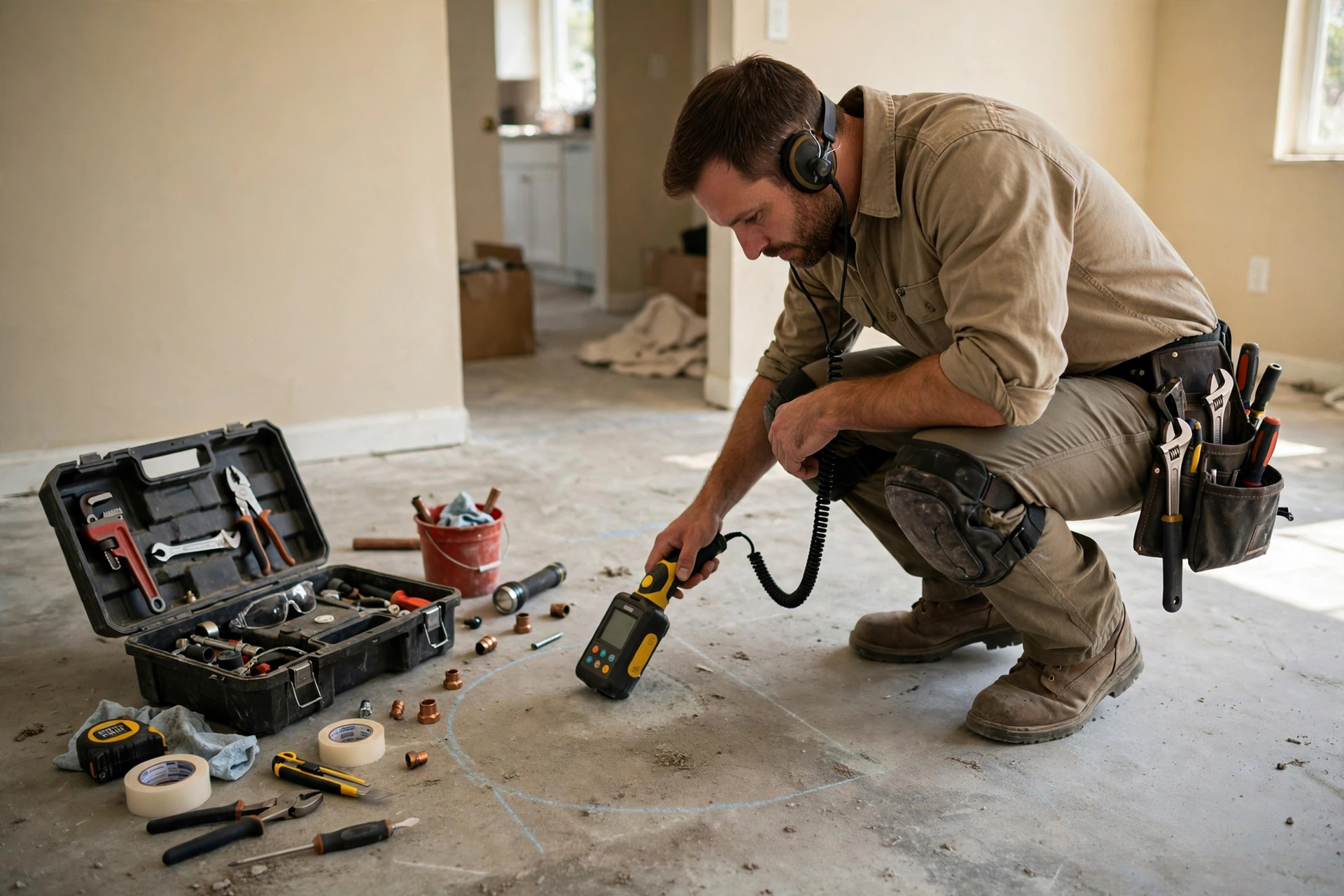
Torrance is full of post-war slab homes, and a copper leak under that slab often announces itself quietly: a warm patch of floor, a bill that climbs, and no visible puddle.
Why Torrance slab homes are a special case
Torrance grew fast after the war, and much of that growth was slab-on-grade tract housing. In those homes, copper water lines run under the concrete slab, not through a crawlspace where a leak would be easy to see. That construction choice made building fast and cheap, but it also means a pinhole leak in a copper line can run for weeks or months before anyone notices. The water does not pool on a floor. It soaks into soil under the slab, wicks upward, and erodes the ground that supports the concrete. By the time a homeowner calls, the problem is often older than the bill suggests.
The signs that point under the slab
A rising water bill with no change in use is the most common first clue. Check the meter when no fixtures are running. If the meter dial is still moving, water is going somewhere, and in a slab home that somewhere is often under the floor. A warm or damp patch of tile, laminate, or carpet is the second clue, especially if it does not dry. Cracks in tile, a floor that sounds hollow when tapped, or a musty smell near a baseboard can all point the same way. In some homes the first sign is a low hot-water pressure, because the leak is stealing flow before it reaches the fixture.
Do not confuse a slab leak with a roof leak or a condensation problem. A slab leak is persistent, it does not depend on rain, and it usually tracks with water use. Turning off the main water supply and watching the meter stop is a simple test that narrows the field fast. A technician then uses listening equipment, pressure testing, and sometimes thermal imaging to locate the leak within a few feet, so the slab is not opened blindly. Opening concrete without a location is expensive and destructive, and it is the step a careful diagnosis is meant to avoid.
Spot repair, reroute, or repipe: how the choice is made
A single pinhole in an otherwise sound line can sometimes be repaired by opening a small section of slab, fixing the spot, and patching the concrete. That is the least disruptive option, and it makes sense when the rest of the system is in good shape. In many Torrance post-war homes, though, the rest of the system is not in good shape. Once one copper line under a slab has failed from age and water chemistry, the next failure is often nearby. Repairing one spot and then opening the slab again a year later for a second leak is a pattern homeowners know well.
That is why rerouting is often the more durable choice. A reroute abandons the failing under-slab line and runs a new line above the slab, through walls or an attic, where it can be inspected and repaired in the future. It avoids breaking concrete, and it removes the line from the soil and movement that caused the failure. In homes where multiple under-slab lines are ageing, a partial or whole-house repipe through accessible routes can be the honest long-term answer, even though it costs more up front than a single spot repair. The right choice depends on the age of the system, how many leaks have already happened, and what a pressure test shows about the remaining lines.
Frequently asked questions
Is a warm floor always a slab leak?
No, but in a Torrance post-war slab home a persistent warm patch, especially on a hot-water line route, is a strong slab-leak sign and should be checked with a meter and listening test.
Can a slab leak be fixed without breaking the floor?
Sometimes. A reroute runs a new line above the slab and avoids breaking concrete, but a spot repair does require opening a small section of slab at the located leak.
Will insurance cover a slab leak?
Coverage varies by policy and by whether the damage is sudden or long-term. Photograph everything, keep bills, and check your policy before authorising major work.
Related service
Call Los Angeles Plumbing Pros
If you are seeing the signs in this post, describe what you see, where it is, and when it started. A technician will talk through the next step before any work starts.