
Slab Leak Detection and Repair in Los Angeles: Post-War Slab Homes, Signs, and Repair Choices
Los Angeles Plumbing Pros Blog — 30 Oct 2026
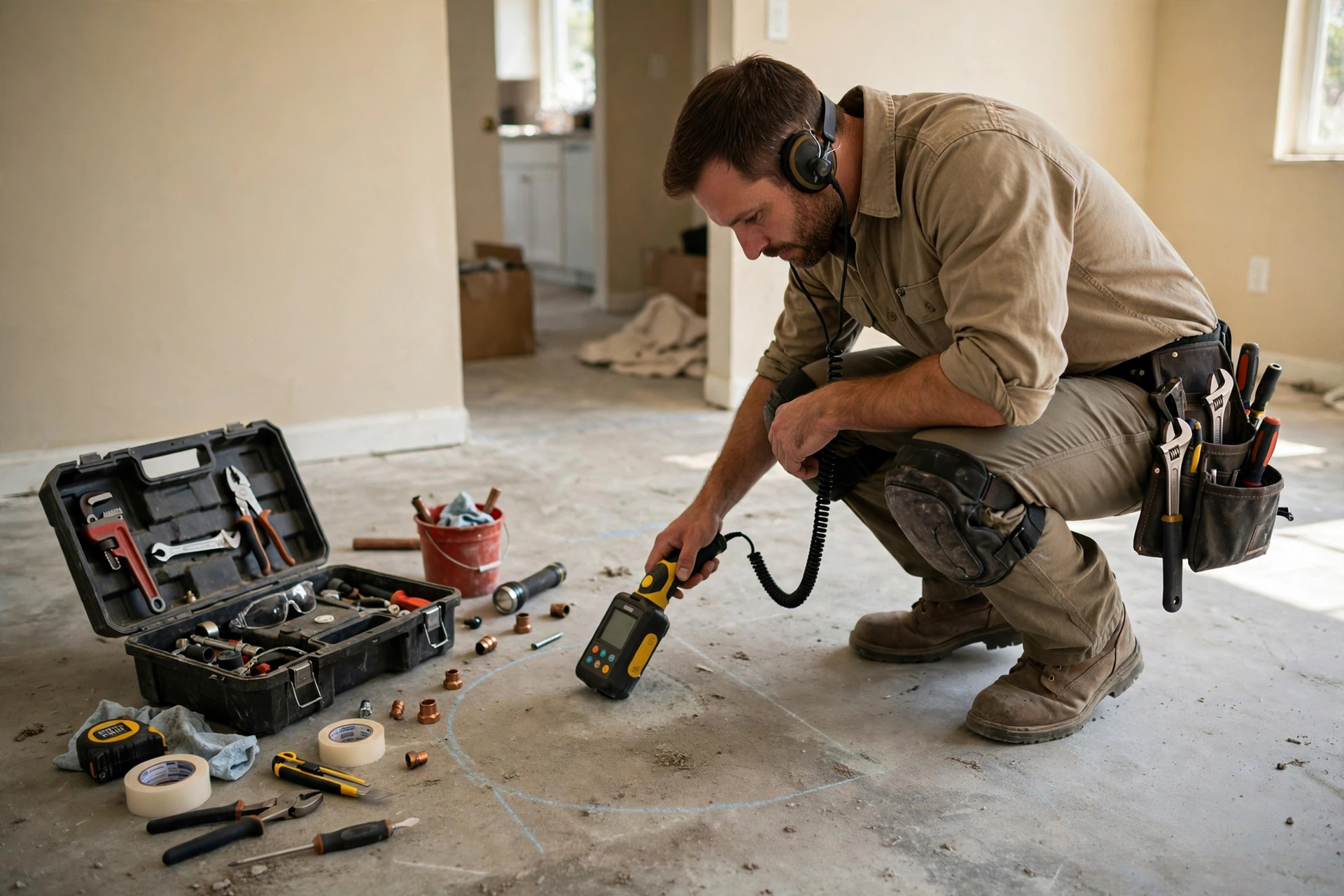
A slab leak is a leak in a water pipe that runs under the concrete slab of a home, and in Los Angeles it is a problem closely tied to the age and construction of the house. Many post-war homes, especially in Torrance and across the South Bay and the San Fernando Valley, were built on concrete slabs with copper water lines buried beneath them or embedded in the slab itself. Those lines have now been in service for sixty years or more, carrying hard Los Angeles water, sitting in soil that moves with the seasons, and in some cases coping with hillside pressure over 80 PSI. When a line under a slab develops a pinhole or a crack, water escapes into the soil and the concrete, and the signs can be subtle at first: a warm spot on the floor, a damp patch that never dries, a water bill that rises without explanation, or the sound of running water when no tap is open.
Slab leaks deserve prompt attention because the damage is not limited to the pipe. Water under a slab can erode soil, undermine the slab, encourage mould growth in flooring and walls, and damage finishes that are expensive to restore. At the same time, a slab leak is not a reason to panic or to accept a major excavation without evidence. Modern detection methods can often locate a leak within a small area, and the repair may involve a targeted opening, a reroute of the line above the slab, or a broader repiping decision, depending on the age and condition of the whole system. This post explains how slab leaks develop in Los Angeles homes, how they are detected, what repair options look like, and how homeowners in Torrance and similar post-war neighbourhoods can make a calm, informed decision.
Why post-war slab homes in Los Angeles are vulnerable
The post-war building boom that shaped Torrance, Lakewood, parts of Long Beach, and much of the San Fernando Valley produced large numbers of slab-on-grade homes in a short period. Copper was the standard water line material, and burying it under the slab was efficient and, at the time, considered durable. Over decades, however, several factors work against those buried lines. Los Angeles water hardness, commonly 200 to 400-plus parts per million, leaves mineral deposits and contributes to corrosion inside copper lines, especially where water sits or where dissimilar metals meet. Soil chemistry and moisture also matter: soil that is alternately wet in winter and dry in summer moves, and that movement stresses rigid pipe. Small earth movements over many years add further stress, particularly in homes near hillsides or on expansive soils.
The age range matters. Homes built in the 1948 to 1965 period often have not only aging copper under the slab but also galvanized supply lines in other parts of the system, older fixtures, and original pressure regulation that may no longer be holding hillside pressure in check. A copper line that has served for sixty years may have thinned in places, developed pitting corrosion, or been damaged where it passes through the slab edge or where concrete and soil meet. A single pinhole is often a warning that other sections of the same system are in similar condition, even if they have not yet leaked. That does not automatically mean the whole house needs repiping, but it does mean a single repair should be weighed against the condition of the rest of the system, rather than treated as an isolated accident.
Signs of a slab leak homeowners notice first
Most slab leaks are discovered through indirect signs, not by seeing water. A sudden or gradual rise in the water bill, with no change in household use, is one of the most reliable early indicators, because a leak under a slab runs continuously, day and night. A warm area on a tile or wood floor, especially in a hallway or living area where no heating is present, often points to a hot water line leak under that spot, as warm water heats the slab and the flooring above it. Damp carpet, a musty smell, or flooring that buckles or discolours can indicate a leak that has been present for some time, and in homes with tile, grout may darken or stay damp long after cleaning.
Other signs are auditory or mechanical. Hearing water running or hissing when all taps are closed, noticing the water meter dial moving when no water is being used, or finding that the water heater cycles more often than usual can all point to a leak. In some cases, the first sign is outside: a patch of lawn or soil that stays wet, or a driveway area that remains damp while the rest dries. Foundation symptoms, such as new cracks in walls or floors, or doors that begin to stick, can occur if a leak has eroded soil under the slab, but those symptoms have many causes and should not be assumed to prove a slab leak on their own. The sensible first step when several of these signs appear together is a meter test and a professional leak detection visit, rather than waiting to see if the problem resolves, because slab leaks do not heal themselves.
How slab leaks are detected without tearing up the floor
Detection begins with confirming that a leak exists and whether it is on the hot or cold side. Shutting off fixtures and watching the meter, isolating hot and cold lines, and checking pressure can narrow the problem considerably. From there, technicians use a combination of tools. Acoustic listening equipment amplifies the sound of water escaping under pressure, and an experienced technician can follow that sound to a surprisingly small area. Thermal imaging can reveal warm patterns in a floor where a hot water leak is heating the slab, though it is less useful for cold lines and can be confused by sunlight, heating systems, and flooring materials. Moisture meters and inspection of walls, baseboards, and flooring help map how far water has travelled, which is not always the same as where it started.
In some cases, a camera or a tracer gas is used to confirm a location, and in others, the evidence from listening and thermal imaging is strong enough to plan a repair opening. The goal is to limit the opening to the smallest area that allows a sound repair, rather than cutting a long trench across a finished floor on a guess. Homeowners should expect the technician to explain what each tool showed, where the leak is believed to be, and how confident that location is, before any concrete is cut. If the location is uncertain, further testing is better than a large exploratory opening. A slab leak under a kitchen or bathroom, where fixtures and cabinets limit access, may present different challenges than a leak under an open living room floor, and the detection plan should reflect that.
Repair options: spot repair, reroute, and repiping
Once a leak is located, there are generally three paths, and the right one depends on the pipe condition, the location, and the age of the system. A spot repair involves opening the slab at the leak, cutting out the damaged section, and replacing it with new pipe, then restoring the concrete and flooring. This is often the least disruptive option for a single, well-located leak in an otherwise sound system, and it preserves the existing layout. Its limitation is that it does not address other aging sections of the same line, so if the system is broadly corroded, another leak may appear elsewhere within months.
A reroute moves the water line out from under the slab, typically through walls or the attic, bypassing the leaking section and sometimes the whole buried run. A reroute avoids further slab openings and can be a good choice when the leak is under a difficult location, such as a bathroom with expensive tile, or when the buried line has leaked before. A full or partial repiping replaces aging supply lines throughout the home with new piping, and it is worth considering when leaks recur, when water pressure and quality have deteriorated because of galvanized lines from the 1948 to 1965 era, or when hard water scale has narrowed much of the system. Repiping is a larger project, but for a Torrance post-war home with multiple slab leaks, it can be less disruptive over time than repeated slab openings, each requiring flooring restoration. The decision should be based on inspection evidence and on how the homeowner plans to use the home, not on pressure to choose the largest job.
Slab leaks, hard water, and pressure in Los Angeles
Hard water and pressure are not side issues in slab leak work; they are part of why leaks happen and why they recur. Water at 200 to 400-plus parts per million carries calcium and magnesium that deposit inside pipes, roughen surfaces, and contribute to corrosion, particularly in copper lines that are already decades old. That scale also affects water heaters, fixtures, and valves, so a home with a slab leak often shows other hard water symptoms, such as white buildup on showerheads, reduced flow at aerators, and a heater that rumbles or loses capacity. Addressing water treatment, such as a softener or filtration appropriate to the home, does not repair a leak that already exists, but it can slow further corrosion in a new or rerouted line, and it is worth discussing as part of a longer-term plan.
Pressure is equally important, especially on hillside lots and in areas where municipal pressure is high. Water pressure over 80 PSI stresses every joint, valve, and pipe in the home, and it can turn a small weakness under a slab into a leak sooner than it would otherwise occur. A pressure-reducing valve that is failing, stuck, or absent should be checked as part of slab leak work, because repairing a pipe without correcting excessive pressure leaves the new pipe under the same strain as the old one. In flatter Torrance neighbourhoods, pressure may be more moderate, but it should still be measured, not assumed. A simple pressure reading, taken at an outdoor hose bib or another accessible point, is a quick check that can prevent a repeat failure.
What to expect, and how to protect the home afterwards
Slab leak work, even when it is targeted, involves noise, dust, and temporary disruption, and homeowners should be told in advance what will be opened, how flooring will be handled, and how water will be managed during the repair. A spot repair typically requires shutting off water to the affected line, cutting a section of concrete, making the pipe repair, testing it under pressure, and then patching the concrete. Flooring restoration may be a separate step, especially for wood or tile that cannot be matched exactly from a small patch. A reroute, by contrast, may involve opening walls or ceilings rather than the floor, and the old buried line is left in place, capped and abandoned. Either way, testing before restoration is essential: the repaired or rerouted line should hold pressure and show no sign of leakage before finishes are closed up.
Afterwards, sensible habits help protect the investment. Monitor the water bill for unexplained rises, note any new warm spots or damp areas promptly, and keep a record of where the repair was made, what material was used, and whether any lines were rerouted. If the home still has older galvanized lines or a heater affected by hard water, plan inspections for those systems rather than waiting for a failure. In Craftsman-era homes with crawlspaces, access is different and leaks may show in the crawlspace before they show in the floor, but in a post-war slab home, the floor and the meter are the early warning system. Prompt attention to a small change in either can prevent a minor pinhole from becoming a major flooring and foundation problem, and it keeps the decision in the homeowner's hands rather than forcing an urgent, large-scale repair.
Documentation, flooring, and planning the next step after a slab repair
After a slab leak is repaired, documentation is more useful than most homeowners expect. A record of the leak location, the detection methods used, the repair method, the pipe material installed, and any rerouting should be kept with other home records, along with photographs of the opened area before restoration and the final patched floor. That file helps a future plumber avoid cutting into the same area blindly, helps a contractor planning a remodel understand where lines now run, and helps a buyer or home inspector see that a known problem was addressed with evidence rather than guesswork. In a Torrance post-war home, where several houses on the same street may share similar plumbing layouts and similar leak histories, that documentation also helps neighbours and future owners understand a pattern that is common to the area, not unique to one house.
Flooring restoration is often the part of a slab repair that causes the most frustration, and it deserves discussion before work starts. Concrete can be patched, but flooring over it, whether tile, wood, laminate, or carpet, may not match the surrounding floor exactly, especially if the original material is discontinued or has aged and faded. A homeowner should ask whether the repair includes flooring restoration, what material will be used, and how a mismatch will be handled, rather than assuming the floor will look exactly as it did before. In some cases, a reroute that avoids the floor altogether is chosen partly for this reason: opening a wall or ceiling, while still disruptive, may be easier to restore invisibly than cutting through a distinctive tile floor in a kitchen or bathroom.
Water damage beyond the pipe also needs attention. A slab leak that ran for weeks may have dampened flooring, baseboards, drywall, and insulation, and those materials may need drying or replacement even after the pipe is fixed. A musty smell that persists after a repair, or flooring that continues to buckle, should be investigated rather than covered with new finishes, because trapped moisture can encourage mould growth and can damage new flooring as well. Drying equipment, moisture readings, and, where appropriate, advice from a restoration specialist can help determine whether an area is truly dry. That step is separate from plumbing repair, but skipping it can undo the benefit of a good pipe repair by leaving damp materials in place.
Planning the next step means looking at the whole system with fresh information. If the slab leak was the first sign of trouble in an otherwise sound system, a targeted repair and a watchful eye on the water bill may be enough. If it was the second or third leak, or if the system still has galvanized lines from the 1948 to 1965 era, hard water scale throughout, and pressure that is not well controlled, the homeowner should discuss a phased plan: what to monitor, what to repair next if another leak occurs, and at what point a partial or full repiping becomes the more sensible path. That plan does not need to be decided in a single day, and it should not be forced by a single repair visit. A calm, documented approach, with the leak location and pipe condition on record, lets the homeowner choose the next step on evidence, rather than reacting to each new damp patch as if it were a surprise.
Frequently asked questions
Is a warm spot on the floor always a slab leak?
Not always. Heating systems, sunlight, and appliances can warm a floor. A warm spot combined with a rising water bill, running water sounds when taps are closed, or a moving meter with no water use is much more suggestive of a hot water slab leak.
Does a slab leak always mean jackhammering the whole floor?
No. Detection aims to locate the leak to a small area, and many repairs involve a single targeted opening or a reroute that avoids the slab altogether. A whole-floor excavation is not the usual first step.
Should I repipe after one slab leak in a Torrance post-war home?
Not necessarily. One leak in an otherwise sound system may be repaired on its own. Repiping becomes worth considering when leaks recur, when much of the system is corroded, or when pressure and water quality problems affect the whole home.
Related service
Call Los Angeles Plumbing Pros
If you are seeing the signs in this post, describe what you see, where it is, and when it started. A technician will talk through the next step before any work starts.