
Sewer Line Repair in Los Angeles: Trenchless, Spot Repair or Full Replacement?
Los Angeles Plumbing Pros Blog — 30 Oct 2026
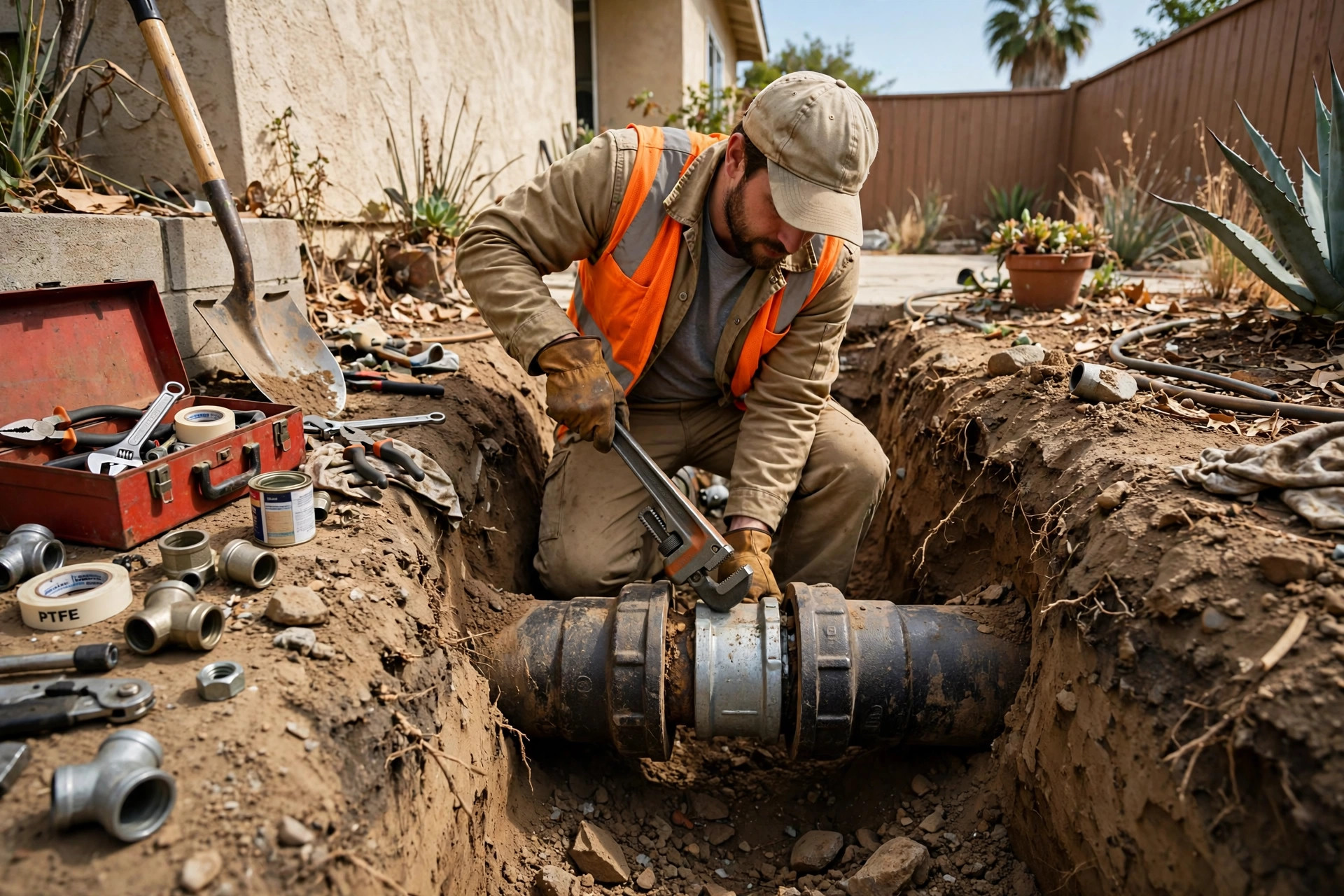
Few home repairs feel as daunting as sewer line repair. The pipe is underground, the work may involve a yard, a driveway or a slab, and the cost and disruption depend on a system most homeowners have never seen. Yet sewer line repair in Los Angeles is also one of the areas where good information makes the largest difference, because the right repair depends less on a general rule and more on the specific condition of one lateral: its material, its defects, its depth, its grade, and what sits above it.
Los Angeles laterals are unusually varied. Clay pipe in short sections, cast iron with internal corrosion, and newer plastic where repairs and additions have been made can all occur in a single run. Oak, sycamore and pepper roots enter through joints, expansive soil shifts those joints, winter rain pushes groundwater into cracks, and hillside grade complicates both drainage and excavation. A repair that is sensible for a single cracked joint under open soil is not sensible for a collapsed run under a Torrance slab, and a trenchless lining that works for a cracked but shapely pipe will not fix a belly that has lost its grade.
This post explains the main sewer line repair options in Los Angeles, how a camera inspection should guide the choice, what each option involves in practice, how to weigh disruption, longevity and risk, and how to maintain a repaired lateral in hard-water, root-prone and wet-winter conditions.
How sewer line repair works in Los Angeles homes
Sewer line repair starts, or should start, with a camera inspection and a surface location. The camera shows the defect, its distance from a cleanout, and its depth, while a locator marks that position on the ground. Without that map, excavation is guesswork, and a trench may be dug in the wrong place or larger than necessary. With that map, a spot repair can target a few feet, a lining can be sized to the damaged run, and a full replacement can be planned along the actual route, with knowledge of driveways, trees, patios and utility crossings.
The repair itself must respect grade. A sewer lateral works by gravity, falling steadily from the house to the street, and any repair that changes that fall, creates a low spot, or leaves a lip at a joint will cause future pooling and clogging. That is why a repair is not just about closing a crack, but about restoring a smooth, correctly sloped bore. A new section must align with the old pipe on both sides, a liner must follow the existing grade without wrinkling or bridging a belly, and a replacement must be laid with consistent fall and proper bedding in the trench.
Los Angeles causes and housing types behind lateral failure
Clay laterals fail at their joints. Each short section joins the next, and over decades soil movement, root pressure and ground settlement shift those joints, opening gaps that admit roots and groundwater. A clay lateral that has served for fifty years may still have long sound sections, with failure concentrated at a few joints, which is why spot repair and lining are often viable for clay. A clay lateral that has collapsed in several places, or lost its grade over a long run, has moved beyond joint failure into structural failure, and that distinction, visible on camera, drives the repair choice.
Cast-iron laterals fail from the inside out. Corrosion and scale narrow the bore, roughen the wall, and eventually perforate the pipe, particularly at the bottom of horizontal runs where water sits. A cast-iron lateral may look intact from the surface while the camera shows a bore reduced by scale and pitting, with cracks at joints. Lining can rehabilitate a cast-iron run that still holds its shape, by creating a smooth new interior, but a perforated or collapsed cast-iron section needs replacement, because a liner cannot bridge a hole or restore a lost shape.
Housing age ties these materials to a timeline. Homes built between 1948 and 1965 often have laterals from the same era as their galvanized supply pipes, so a homeowner facing a sewer repair may also be facing supply repipe decisions, and coordinating those projects can save repeated excavation and disruption. Craftsman homes with crawlspaces offer easier access to interior drains and to the house connection, while Torrance slab homes hide the lateral beneath concrete, making camera location and trenchless options more attractive where they are technically feasible. Multi-unit buildings in Long Beach and Santa Monica share laterals, so a repair may involve neighbours, common areas and a building-wide plan.
Signs by room and area: what failure looks like before repair
Inside the house, lateral failure often appears as a pattern across fixtures rather than a single clog. Multiple drains backing up at once, a toilet gurgling when laundry runs, sewage at the lowest drain, or a floor drain that overflows during a shower all point to the main lateral, not to a local trap. A single slow sink or tub, by contrast, usually points to a branch, and repairing the lateral will not fix it. Noting which fixtures are involved, in what order they back up, and whether the problem worsens with high-volume use helps separate a lateral problem from a branch problem before any digging is discussed.
Yard and exterior signs can precede indoor backups by months. A strip of soggy soil over the lateral, grass that grows lush in a line, a depression or sinkhole forming over a pipe, or a persistent sewer smell near a cleanout or side wall can all indicate a lateral leak or break. In a slab home, those exterior signs may be absent, and the first signs may instead be a damp floor edge, a warm patch from a nearby supply leak, or a water bill change that prompts a broader investigation. In a raised home, damp soil or a smell in the crawlspace may be the first clue, because a leaking lateral can drain into the crawlspace before it backs up indoors.
Diagnosis steps: camera, location, and repair planning
Diagnosis for a repair decision is more detailed than diagnosis for a cleaning decision. A camera inspection should record not only the defects, but their exact distances, depths, and relationship to each other: how many joints are affected, how long the damaged run is, whether grade is lost in a belly, and whether the pipe still holds its shape. A single cracked joint at 30 feet is a spot repair candidate, while cracked joints every few feet over 40 feet, or a belly spanning 15 feet, point toward lining or replacement. That quantitative picture, not a single dramatic image, should drive the quote.
Surface location and depth complete the diagnosis. A locator marks each defect on the ground, so the repair plan can account for a driveway, a patio, a mature tree, a gas line or a slab. Depth matters for excavation cost and disruption, and for trenchless feasibility, because a very shallow or very deep lateral, or one with sharp bends, may suit one method better than another. A repair plan that does not reference depths and surface features is incomplete, because the same internal defect has very different implications under open lawn versus under a concrete driveway.
A second check is often needed for grade and soil. A camera shows standing water in a belly, but a level survey or a careful camera grade reading helps quantify how much fall has been lost. Soil conditions, observed during any test excavation or inferred from the neighbourhood, affect bedding and compaction for a replacement, and root conditions affect whether a new joint needs additional protection. A technician who discusses grade, soil and surface features, not just the crack on screen, is planning a repair that will last, not just a pipe change.
Spot repair: when one section is the problem
Spot repair, also called a point repair, replaces a short damaged section of lateral, typically a single joint or a few feet of pipe, through a local excavation. It is the least disruptive structural repair, because only the defective area is opened, and it is the most proportionate response when a camera shows one or two bad joints in an otherwise sound lateral. The new section is joined to the old pipe on both sides, with attention to alignment and grade, so flow is restored without a lip or low spot at either joint.
Spot repair suits several Los Angeles situations well. A clay joint cracked by a single root entry, a cast-iron section perforated in one place, or a joint offset by local soil movement can all be fixed this way, provided the rest of the lateral is sound. It is particularly useful under open soil, in a yard or side passage, where excavation is straightforward and restoration is simple. It is less attractive under a driveway, a slab or a mature tree, where even a small excavation is disruptive, and where a trenchless option might achieve the same result with less surface damage.
Trenchless repair: lining and pipe bursting in context
Trenchless repair aims to renew a lateral with minimal surface digging, using access points at either end of the damaged run. The most common method in Los Angeles homes is cured-in-place lining, where a resin-saturated liner is inserted into the old pipe, inflated to fit the bore, and cured into a smooth new pipe inside the old one. The liner seals cracks and joints, creates a smooth interior that resists roots and scale, and preserves the existing grade, provided the old pipe still holds its shape. It is particularly attractive under driveways, patios, mature trees and slabs, where excavation would be costly and disruptive.
Lining has clear limits that a camera must confirm. It cannot restore grade in a belly, because the liner follows the existing pipe shape, including its low spot, so water will still pool. It cannot bridge a collapsed section, a severe offset, or a pipe that has lost its circular shape, because the liner needs a continuous, shapely host pipe to form against. It also reduces the internal diameter slightly, which is usually acceptable in a lateral that was oversized for household flow, but must be checked where the original pipe was already narrow due to scale or corrosion. A lining proposal without a camera grade and shape assessment should be treated with caution.
Full replacement: when renewal is the honest answer
Full replacement excavates the lateral along its route, or a substantial portion of it, and lays a new pipe with correct grade, bedding and joints. It is the most disruptive option, but it is also the most complete: it resets material, grade, joints and alignment to a known standard, and it removes the uncertainty of an aging pipe with multiple defects. When a camera shows collapse, extensive cracking, a badly bellied run, or deterioration along most of the lateral, replacement is often more economical over time than a series of spot repairs or a lining that cannot address grade loss.
Replacement planning in Los Angeles must account for the route. A lateral under a driveway, a patio, a mature tree or a slab requires a route plan that minimises surface damage, protects roots where possible, and restores surfaces afterwards. A lateral on a hillside needs attention to slope, drainage and compaction, so the new trench does not become a water path. A lateral in expansive Valley soil needs proper bedding and compaction, or settlement will recreate offsets. A shared lateral in a multi-unit building needs coordination with neighbours and a plan for temporary drainage during the work, because the house cannot drain normally while its lateral is open.
The new pipe material and joint system matter for Los Angeles conditions. Modern plastic pipe with sealed, root-resistant joints is a common choice for replacements, because it resists corrosion and root entry better than older clay joints, and it can be laid in longer sections with fewer joints. The grade must be checked as the pipe is laid, not assumed, and the trench must be bedded and backfilled in layers, with compaction that prevents future settlement. A replacement that is laid quickly without grade and bedding checks risks repeating the very belly or offset it was meant to fix.
What to check before calling, and questions to ask
Before calling, assemble the evidence a repair decision needs. Note the symptom history, previous cleaning and camera reports, the location of cleanouts, and any surface signs such as soggy soil or lush grass over the lateral. If a previous camera recording exists, keep it available, because a new inspection compared with an old one shows change, and change is often the deciding factor between monitoring and repair. Note any planned work over the lateral, such as a driveway, patio or tree planting, because that work should follow, not precede, a needed repair.
When a technician proposes a repair, ask for the camera evidence in specific terms. Which feet of lateral are damaged, how deep are they, what is the pipe material there, and what is the grade? What does each option cover, and what does it leave? How will surface features, trees and driveways be handled, and how will the new work be protected against roots and groundwater? What is the expected service life of each option under Los Angeles conditions, and what maintenance will it need? A clear, footage-based answer to those questions is a sign of a plan grounded in the pipe, not in a preferred method.
Prevention and maintenance after repair
After any sewer repair, habits and monitoring protect the investment. Keeping wipes, sanitary products, grease and excessive food waste out of drains reduces load on the new pipe and on any older sections that remain. Managing trees over the lateral, avoiding new large plantings directly above it, and keeping irrigation from saturating the soil around it reduce root pressure. Those steps are simple, but they are the difference between a repair that lasts and a repair that is soon stressed by the same forces that damaged the original pipe.
Periodic camera checks after repair are worthwhile, particularly for a spot repair or lining where older pipe remains. A camera a few years after repair confirms that joints are sealed, that no new root entry has occurred, and that grade has held, especially in expansive soil or hillside areas where settlement is possible. Keeping the repair record, including camera footage, distances, materials and surface marks, makes future work faster, because the next technician will not need to rediscover the route, depth and history of the lateral.
City-by-city notes across Los Angeles
Pasadena and Glendale repairs often involve a mix of materials and a hard-water history. A lateral here may need a spot repair at a clay joint, a lining for a scaled cast-iron run, or a replacement where both have deteriorated, and the camera must map that mix section by section. The presence of Craftsman crawlspaces can ease access to the house connection, while mature street trees complicate excavation, so a trenchless option is often worth evaluating seriously in these neighbourhoods, provided grade and shape allow it.
Torrance slab homes make repair choice especially consequential. A spot repair under a slab involves precise location and interior restoration, a lining avoids slab cutting where feasible, and a full replacement under a slab is a major interior project. That is why Torrance laterals benefit most from a detailed camera and locator map before any method is chosen, and why a lining that preserves grade and seals joints can be particularly valuable there, when the camera confirms it is technically suitable.
Long Beach and Santa Monica add shared systems and coastal conditions. A repair in a multi-unit building may need to address a shared lateral, coordinate with neighbours, and plan for temporary drainage for several households, which changes both method and timing. Coastal laterals with groundwater inflow need joints sealed against water entry, not just against roots, and a repair that seals the pipe but leaves a belly will still pool water and clog, so grade must be part of the coastal repair conversation, not an afterthought.
Frequently asked questions
How do I know whether I need a spot repair, lining or full replacement?
The camera inspection decides. A single bad joint in a sound lateral suits a spot repair, a longer cracked but shapely run may suit lining, and a collapsed, badly bellied or extensively damaged lateral usually needs replacement. The decision should reference specific distances, depths and defects in the report, not a general preference for one method.
Will trenchless lining fix a belly in my sewer line?
No. A liner follows the existing pipe shape, so a belly that holds water will still hold water after lining. A belly that causes recurring clogs or backups usually needs a repair that restores grade, which may be a spot replacement of that section or a full replacement, depending on its length.
Can roots be kept out of a repaired sewer line?
Sealed modern joints resist roots far better than old clay joints, and a lining seals existing joints along its run. Roots can still enter at an unrepaired joint, a house connection or a street connection outside the repaired section, which is why a repair plan should state exactly which feet are covered and what remains.
Related service
Call Los Angeles Plumbing Pros
If you are seeing the signs in this post, describe what you see, where it is, and when it started. A technician will talk through the next step before any work starts.