
Rooter Service and Tree-Root Removal in Los Angeles: Clearing Roots Without Guessing at the Pipe
Los Angeles Plumbing Pros Blog — 30 Oct 2026
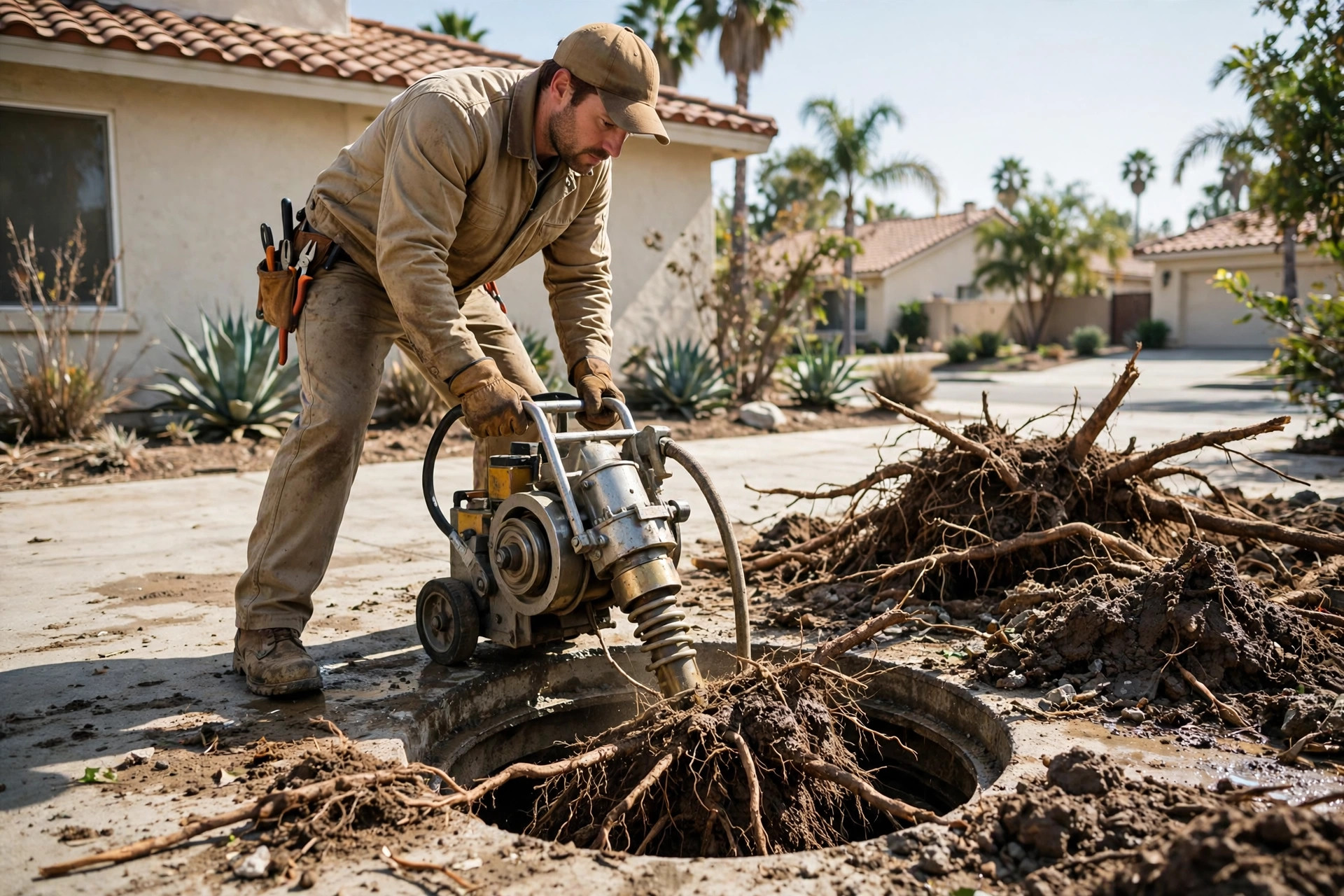
When a Los Angeles drain backs up again a few months after it was cleared, tree roots are often the reason, and a rooter service is the tool most homeowners hear about first. A rooter is a motorised cable machine that feeds a rotating cutting head through a drain or sewer line, slicing through root masses and clearing the blockage so water can flow again. In a city planted with oaks, sycamores, and pepper trees, and built over clay and cast-iron laterals whose joints have had decades to open, root intrusion is not a rare event. It is one of the most common causes of recurring sewer trouble in Pasadena, Glendale, Burbank, Los Feliz, Hancock Park, and the older neighbourhoods of the San Fernando Valley.
Rooter work, done well, is more than pushing a cable until the drain runs. It involves finding where the roots entered, how much of the line they occupy, whether the pipe itself is broken or merely invaded, and whether cutting alone will hold or whether the line needs repair. This post explains how roots get into Los Angeles pipes, what a rooter service actually does, what it cannot fix, and how homeowners can tell the difference between a line that needs periodic root cutting and a line that needs a camera inspection and a longer-term repair. It also covers the local details that shape root problems here, from dry-climate root behaviour to winter rain and hillside soil movement.
How roots find Los Angeles pipes
Tree roots do not attack pipes at random. They grow toward moisture, and in Los Angeles, where summers are long and dry and irrigation is concentrated around homes, a sewer lateral is a reliable source of water and nutrients year-round. Older clay laterals are especially vulnerable because they were built in short sections. Each joint is a potential opening, and as soil shifts, as winter rain swells and dries the ground, and as small earth movements disturb the alignment, those joints can separate by a fraction of an inch. That tiny gap releases vapour and moisture into the surrounding soil, and fine feeder roots follow it. Once a root tip enters the pipe, it finds a constant supply of water, grows rapidly, and branches into a mat that catches everything passing through.
Cast-iron laterals can also suffer root intrusion, though the entry points differ. Corrosion can thin the pipe wall, open cracks at joints and connections, and create rough surfaces where roots and debris catch. In homes built from 1948 to 1965, and in earlier Craftsman-era homes with crawlspaces and older plumbing, the lateral may already be near the end of its expected life when roots become a recurring problem. The species matters too. Oaks develop strong, wide-spreading root systems that can exert considerable pressure on a pipe. Sycamores, common as street trees in Los Angeles, are vigorous growers with roots that seek water aggressively. Pepper trees, planted widely for shade, also send roots far from the trunk. A tree does not need to stand directly over the sewer line to cause trouble; roots commonly extend well beyond the canopy, and a street tree in the parkway can invade a lateral on the house side of the sidewalk.
What a rooter service does
A rooter service begins with access. The technician uses a cleanout, a roof vent in some older homes, or another access point to feed a flexible steel cable into the line. Different cutting heads are used for different jobs: a smaller blade to open a passage through a root mat, a larger root-cutting head to shear roots back to the pipe wall, and sometimes a retrieval head to pull out debris. The cable rotates as it advances, and the technician feels resistance, watches how far the cable travels, and notes where it meets the blockage. In a typical Los Angeles lateral, the blockage is often near a joint, near the property line, or where the lateral meets the city main, but it can occur anywhere roots have entered.
Clearing the blockage restores flow, but the work is not finished when water starts draining again. A good rooter visit includes flushing the line to carry cut roots and debris out, checking other drains in the home to confirm the main line is clear, and explaining what was found: how far in the roots were, how dense the mat was, and whether the cable suggested a broken, offset, or bellied section. That information matters because root cutting treats the symptom, not the opening that let roots in. Roots will grow back through the same joint, often within months, if the pipe is not repaired. Homeowners who understand that distinction can plan sensibly, rather than being surprised each time the drain slows again.
When cutting is enough and when it is not
Root cutting alone can be a reasonable short-term step in several situations. If a home is about to be sold, if a larger sewer replacement is planned but cannot be done immediately, or if the pipe is otherwise sound and the root entry is small, periodic cutting can keep the line flowing while a longer-term plan is made. Some homeowners in Los Angeles choose scheduled root cutting once or twice a year, timed before the winter rain season, to reduce the chance of a backup during heavy storms when soil is saturated and drains are under extra load. That approach is honest only when it is presented as maintenance, not as a cure.
Cutting is not enough when the pipe itself is failing. If a camera shows a collapsed section, a major offset where one pipe section has dropped away from the next, a belly that holds standing water, or a crack that is widening, cutting roots will not restore the pipe. In those cases, the line needs repair or replacement, and trenchless methods may be an option if the pipe is a suitable candidate. Repeated cutting can also, over time, enlarge an already damaged opening if the cutting head is used aggressively on a fragile clay joint. That is why a camera inspection after a stubborn or recurring root blockage is so important. It turns a guess about the pipe into evidence, and it lets the homeowner compare the cost of repeated cutting over several years with the cost of a repair that removes the entry point altogether.
Camera inspection: the step that changes the decision
After a rooter clears a line, a camera inspection is the most useful next step for a Los Angeles home with recurring root trouble. A small camera on a flexible cable is pushed through the lateral, recording the pipe interior, the joints, the root entry points, and any structural damage. The footage shows whether roots entered at one joint or at many, whether the pipe is clay or cast iron, whether there are bellies, offsets, or cracks, and where the problem lies in relation to the house, the yard, and the street. That location matters for planning, because a problem near the street connection involves different access and coordination than a problem close to the house.
Homeowners should ask to see the footage or at least a clear description of it, including distances from the access point. A report that simply says roots were found is not enough to plan a repair. A useful report identifies each entry point, describes the pipe condition between entries, and notes whether the line holds water in any section. In hillside areas, where pressure over 80 PSI and slope movement add stress to the whole plumbing system, and in Torrance and other post-war areas where slab construction changes how pipes are accessed, that detail helps distinguish a lateral problem from an interior drain problem. It also prevents the opposite mistake: replacing a whole lateral when only one joint or one short section is actually damaged.
Preventing the next root invasion
Prevention starts with the trees, but it does not mean removing every tree near a sewer line. Mature oaks, sycamores, and pepper trees are part of what makes many Los Angeles neighbourhoods attractive, and they provide shade that reduces cooling load in summer. The practical steps are more targeted. Avoid planting new large-rooted trees directly over a known sewer alignment, and if a new tree is planned, check where the lateral runs first. Water trees deeply but away from the pipe alignment where possible, so roots are not drawn toward the lateral for their only moisture. Keep the area over the lateral free of heavy structures that would make future access difficult, and keep cleanout locations accessible and marked, so a rooter or camera can reach the line without digging up a patio.
Inside the home, habits matter too. Roots catch what the drain carries, so grease, wipes, and other non-dissolving items make a root mat worse and turn a partial blockage into a full backup more quickly. Hard water at 200 to 400-plus parts per million also contributes, because mineral scale roughens pipe interiors and narrows flow, giving roots and debris more to catch on. In homes with aging galvanized supply lines, sediment and rust add to that roughness. None of these factors alone causes root intrusion, but together they determine how quickly a root entry becomes a backup. Regular attention, including a camera check after a second recurrence in a short period, is more useful than waiting for a sewage backup, which can damage floors, walls, and belongings and is far more unpleasant to clean up than a planned service visit.
Winter rain, hillsides, and Los Angeles timing
Root problems in Los Angeles often show themselves in winter. During dry months, a partial root mat may still allow enough flow for normal household use, and the homeowner may notice only a slow drain or occasional gurgling. When winter rain arrives, soil becomes saturated, groundwater levels rise, and the lateral carries extra infiltration through its damaged joints. At the same time, household water use does not fall. The combination can push a marginal line over the edge into a backup, often at an inconvenient moment. That seasonal pattern is one reason a rooter visit in late autumn, before the heaviest rain, is a sensible precaution for a home with a known root history, especially in foothill neighbourhoods where runoff adds to the load on drains and sewers.
Hillside homes face additional considerations. Slope movement can shift a lateral gradually, opening joints that were previously tight and creating new root entry points. Pressure over 80 PSI on hillside lots stresses the supply side of the system, and while that does not directly cause root intrusion, it reflects a plumbing system under strain that deserves a whole-system view. In flat post-war tracts, by contrast, the lateral is often shallower and easier to access, but the clay pipe is just as old and just as vulnerable to roots. In both settings, the right response is the same: clear the blockage, inspect with a camera, and make a plan based on what the pipe actually looks like, rather than assuming that one more cutting will solve a structural problem. That plan may be periodic maintenance, a spot repair, or a full lateral replacement, and each can be the right answer for a different home.
Root cutting, hydro jetting, and everyday drain care
Rooter cutting is sometimes confused with hydro jetting, and the distinction matters for Los Angeles drains. A rooter cuts through a root mass and restores a passage, but it leaves the pipe wall largely as it was, with scale, grease, and debris still clinging to it. Hydro jetting, by contrast, uses high-pressure water to scour the inside of the pipe, washing away grease, scale, and fine roots after the main blockage has been opened. Jetting can be a useful follow-up to root cutting in a pipe that is structurally sound, because it leaves a cleaner surface that is slower to catch debris again. It is not, however, a repair for a broken pipe, and on a fragile clay lateral with cracked joints, high-pressure water must be used with judgement, because it can wash soil through an opening and worsen a void around the pipe.
The choice between cutting alone, cutting followed by jetting, and repair depends on what the camera shows. A line with a single root entry and otherwise sound pipe may do well with cutting and periodic maintenance. A line with heavy grease and scale in addition to roots, common in older Los Angeles homes where kitchen drains and hard water deposits combine, may benefit from jetting to restore flow more fully. A line with multiple root entries, cracks, and offsets is unlikely to be solved by either method for long, and the honest recommendation will lean toward repair or replacement. Homeowners should ask what the camera showed after cutting, whether jetting was considered, and why the recommended approach was chosen for their particular pipe, rather than accepting a standard package that is applied to every home.
Everyday drain habits also affect how quickly roots become a backup. Wipes, even those labelled flushable, do not break down like toilet paper and can snag on a root mat, turning a partial restriction into a full blockage. Grease poured down a kitchen sink cools and hardens in the lateral, narrowing the pipe and giving roots a surface to catch on, and in a hard water system, mineral scale adds further roughness. Coffee grounds, food waste, and hygiene products have a similar effect. None of these items causes roots to enter a pipe, but all of them determine how soon a root entry becomes a problem the household notices. In a home with a known root history, being careful about what goes down drains is not a minor tip; it is one of the few controls the homeowner has between service visits.
Tree care around the lateral deserves a balanced approach. Removing a mature oak or sycamore solely because its roots reached a sewer joint is a drastic step, and in many Los Angeles neighbourhoods, street trees are protected or regulated, so removal may not be a simple homeowner decision. Pruning a tree does not stop its roots from growing toward moisture, and root barriers, where they are appropriate, work best when they are installed with knowledge of where the lateral actually runs, not on a guess. The most practical tree strategy is usually to keep the lateral in good repair, so roots have no opening to exploit, to avoid planting new large trees over the alignment, and to water trees in a way that does not concentrate all moisture directly over the pipe. When a tree does need work, coordinating that work with a camera inspection of the lateral gives a clearer picture than treating the tree and the pipe as separate problems.
Finally, a maintenance schedule should be based on evidence, not on a calendar alone. A home with a sound pipe and a small root entry may need checking once a year, while a home with multiple entries and a pipe nearing replacement may need more frequent attention until the repair is done. The schedule should also account for winter rain, because a line that is marginal in summer can fail in winter when soil is saturated. Keeping a simple log of rooter visits, including the date, the distance to the blockage, and what the technician found, helps the next technician and helps the homeowner see whether the interval between blockages is shortening, which is a sign that the pipe is deteriorating rather than stable. That log turns rooter service from a repeated emergency into a managed plan, and it makes the eventual decision to repair or replace a lateral a decision based on a pattern, not on a single bad day.
Frequently asked questions
Will roots grow back after a rooter service?
Yes, if the opening that let them in is still there. Root cutting clears the pipe, but roots regrow through the same joint over months. A camera inspection shows whether repair or replacement is needed to stop the cycle.
How often should a Los Angeles line with roots be checked?
That depends on the pipe condition and the trees nearby. A line with a known root history is often checked at least once a year, and sooner if drains slow again, especially before winter rain.
Can a rooter damage an old clay pipe?
Used carefully on a pipe that is still largely intact, a rooter clears roots without breaking the pipe. On a fragile, cracked, or collapsed clay section, aggressive cutting can worsen damage, which is why a camera inspection matters for recurring problems.
Related service
Call Los Angeles Plumbing Pros
If you are seeing the signs in this post, describe what you see, where it is, and when it started. A technician will talk through the next step before any work starts.