
Why Los Angeles Hard Water Kills Water Heaters in 3-5 Years
Los Angeles Plumbing Pros Blog — 30 Oct 2026
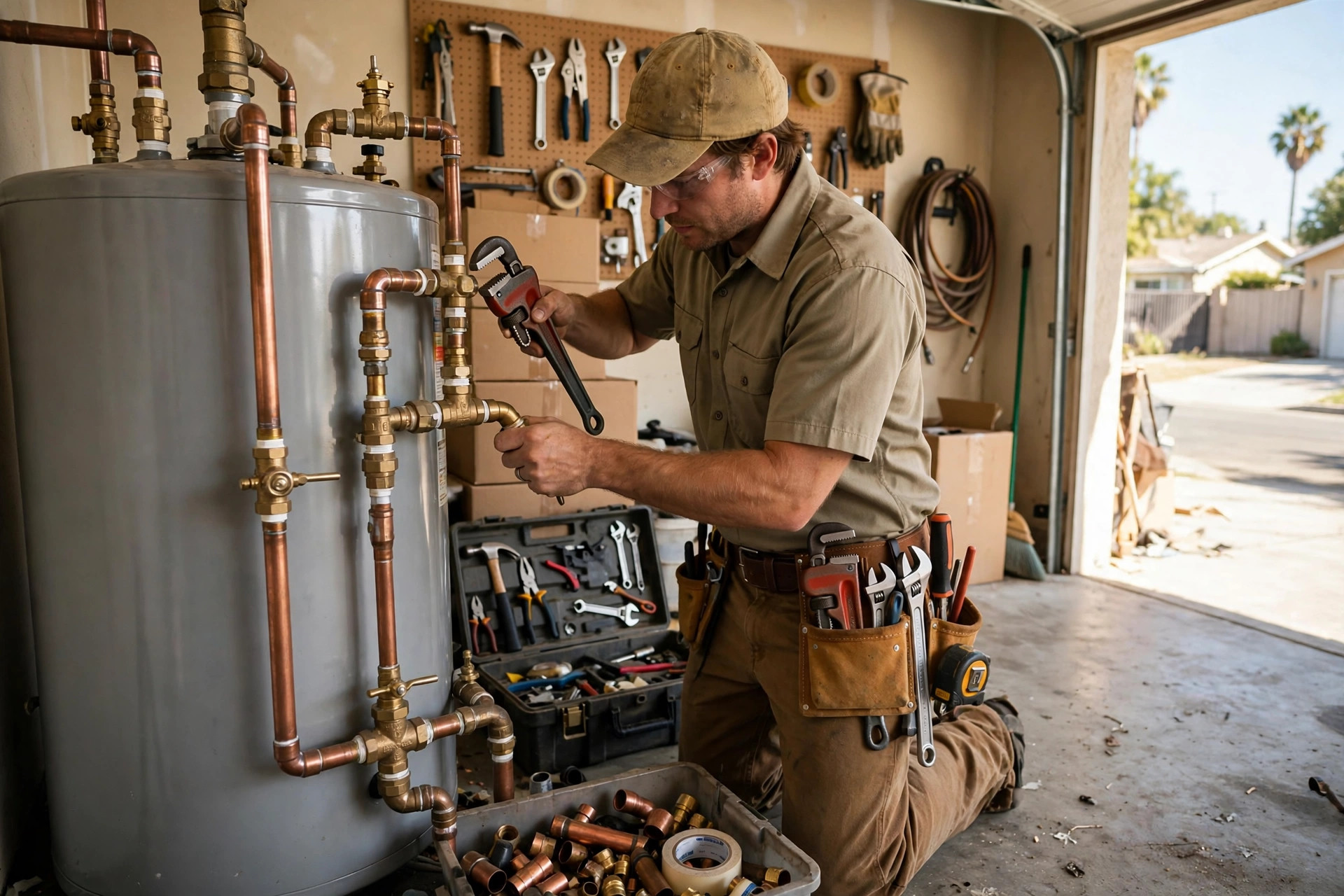
Los Angeles water is hard enough to coat a heater tank, choke a burner, and cut hot-water capacity years early. Here is why it happens, the signs to watch, and what actually helps.
What hard water does inside a heater
Los Angeles water commonly measures 200 to 400-plus parts per million of hardness, and in Glendale it runs over 12 grains per gallon, which is firmly in the very hard range. That hardness is mostly dissolved calcium and magnesium. It does not make water unsafe to drink, but every time a heater warms that water, a little mineral drops out and stays behind. Over months it builds into scale on the tank bottom, on electric elements, and inside tankless heat exchangers. The layer is not just cosmetic. It insulates the water from the burner or element, so the heater has to run longer and hotter to deliver the same shower, and the metal underneath takes more stress with every cycle.
Why 3-5 years is realistic in the hardest areas
A heater in soft-water country can last a decade or more with basic care. In much of Los Angeles, the same heater faces a much heavier mineral load, especially in Glendale, Burbank, and foothill neighbourhoods where hardness is highest and many homes still have older galvanized supply lines that add rust and sediment to the mix. A tank that is never flushed can collect several inches of scale in a few years. That crust overheats the bottom of the tank, weakens the glass lining, and can crack it. Once the lining fails, the steel tank corrodes, and a leak follows. Tankless units are not immune. Without descaling, a tankless exchanger can lose efficiency and fail in a similar window, particularly in homes with high daily hot-water use.
Age alone is not the whole story. Inlet water temperature, household size, and how often the heater cycles all matter. A large family in Pasadena running two showers, a dishwasher, and laundry every day will scale a heater faster than a single person in a Santa Monica apartment. Still, the pattern is consistent across Los Angeles: unflushed heaters in hard-water areas fail early, and the failure is rarely sudden. It is a slow loss of capacity, noise, and efficiency, followed by a leak or a shutdown that feels sudden only because the warning signs were easy to ignore.
Warning signs to check before it fails
Start with hot-water time. If a shower that used to stay hot for twenty minutes now goes lukewarm in ten, scale or sediment is a leading suspect. Listen during a heating cycle for popping or rumbling. Look at the drain valve area and the base of the tank for rust streaks, dampness, or white mineral crust. Check aerators and showerheads for white, chalky buildup, because the same minerals coating those fixtures are coating the inside of the heater. If you have a tankless unit, watch for temperature swings, reduced flow at full-hot, and any descaling or maintenance warning on the display.
Do not wait for a puddle. A tank leak can spread across a garage floor, a laundry room, or a closet in minutes, and in a second-floor condo it can damage the unit below. If the heater is over five years old in a hard-water area and has never been flushed or descaled, treat that as a risk factor on its own. A quick inspection can tell you how much scale is present, whether the anode rod is spent, and whether the pressure-reducing valve and seismic straps are still doing their jobs, because hillside pressure over 80 PSI adds a second stress that shortens heater life.
Frequently asked questions
Does hard water make Los Angeles tap water unsafe?
No. Hardness is calcium and magnesium, and it is not a health hazard at the levels found in Los Angeles water. The problem is damage to heaters, fixtures, and pipes, not safety.
How often should a Los Angeles heater be flushed or descaled?
Once a year is a practical schedule for most Los Angeles homes, and more often if your hardness is at the high end or your household uses a lot of hot water.
Will a water softener fix an already scaled heater?
A softener stops new scale from forming, but it does not remove a thick existing crust inside a tank. A scaled heater may still need flushing, descaling, or replacement, and then a softener protects the new unit.
Related service
Call Los Angeles Plumbing Pros
If you are seeing the signs in this post, describe what you see, where it is, and when it started. A technician will talk through the next step before any work starts.