
Faucet and Fixture Installation in Los Angeles: Drips, Pressure, and Hard Water Wear
Los Angeles Plumbing Pros Blog — 30 Oct 2026
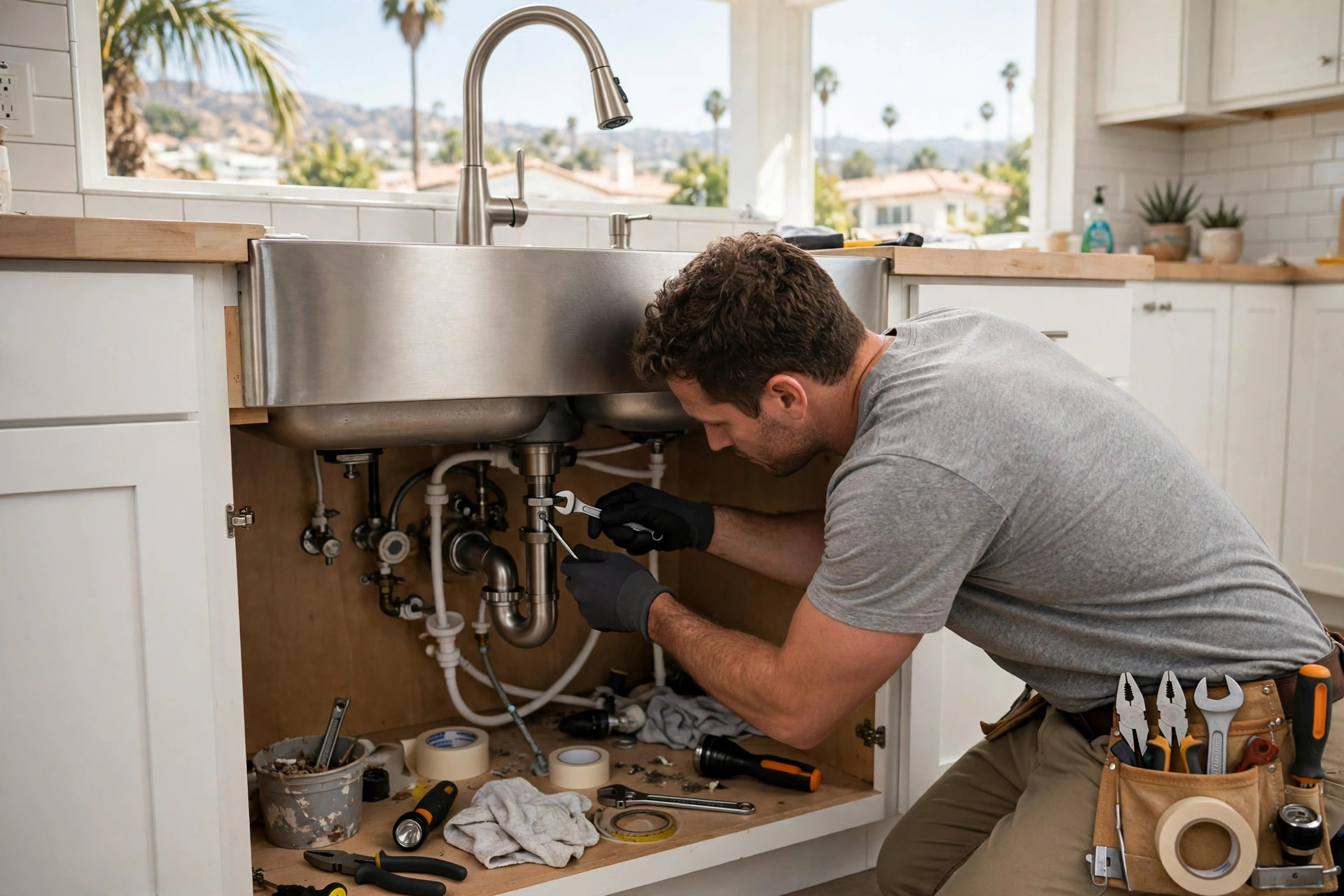
A faucet is the part of your plumbing you touch every day, and when it drips, stiffens, sprays unevenly, or loses pressure, it affects cooking, cleaning, and bathing in a way a hidden pipe problem never does. Behind that familiar handle is a small, precise system: supply lines and shutoffs, a cartridge or valve that controls flow and temperature, an aerator that shapes the stream, and a spout and finish that have to survive daily use, cleaning products, and Los Angeles water. A fixture installation, whether it is a kitchen faucet, a bathroom faucet, a shower valve, or a tub filler, is really about getting all of those parts, and the connections behind the wall, right at the same time.
This post explains how faucets and fixtures work in a Los Angeles home, why local water, pressure, and housing age cause the failures they do, what signs mean in different rooms, how a problem is diagnosed, and when a cartridge repair beats a full replacement — and when it does not. It also covers what to check before calling, how to keep a new fixture working in hard water, and how the answer changes from Glendale to Santa Monica, from a hillside house to an older apartment.
How faucets and fixtures work in a Los Angeles home
Most modern faucets control water with a cartridge, a compact unit inside the faucet body that opens, closes, and, in a single-handle faucet, mixes hot and cold water as you move the handle. Turn the handle and the cartridge aligns openings that let water through; turn it back and the openings close and the flow stops. Older two-handle faucets use separate hot and cold valves, often with washers or ceramic discs, but the idea is the same: a seal inside the faucet, not the handle itself, is what actually stops water. When that seal wears, scales up, or is damaged by sediment, the faucet drips, even when the handle feels fully closed.
At the end of the spout, an aerator mixes a small amount of air into the stream, which makes the flow feel fuller while using less water and reduces splashing. Under the sink, supply lines bring hot and cold water to the faucet, and angle stops allow each side to be shut off for service without shutting off the whole house. Shower fixtures work on the same principle at a larger scale, with a valve behind the wall controlling temperature and flow to a showerhead or tub spout, and a trim plate and handle on the outside that you actually see and touch. Because so much of a shower valve is hidden, a problem there can look like a simple handle issue on the surface while the real wear is inside the wall, which is why diagnosis matters before a trim is changed for cosmetic reasons alone.
Why Los Angeles water, pressure, and housing cause fixture problems
Los Angeles hard water, commonly 200 to 400-plus parts per million and over 12 grains per gallon in Glendale, is the main reason faucet parts fail early here. Scale builds up on cartridges, inside aerators, and around shower valve components, making handles stiff, streams uneven, and seals less reliable. A showerhead that sprays in all directions, a kitchen faucet that loses pressure over months, and a bathroom faucet that drips after being turned off are all classic scale stories, and they often appear together across a house because the same water feeds every fixture.
Pressure and housing age add to the load. Hillside homes can run at pressure over 80 PSI, and high pressure makes cartridges wear faster, causes dripping after shutoff, and can make a faucet hammer or spit when it is opened quickly. Homes built between 1948 and 1965 often have older angle stops that no longer shut off cleanly, galvanized supply sections that release sediment, and original shower valves that no longer match modern trim, so a simple faucet change can reveal a stop, a supply line, or a valve body that also needs attention. Older apartments in Santa Monica and Culver City, with shared walls and shared risers, bring their own pattern: a fixture problem in one unit can be linked to pressure or sediment in a shared supply, and access to shutoffs in a common area can decide whether a repair is a quick job or a building-coordinated one. Coastal homes in Santa Monica and Long Beach also face corrosion on exposed finishes and fittings from salt air, which shortens the life of cheaper finishes and outdoor fixtures in particular.
Signs by room and area
In the kitchen, the signs are about flow and control. A faucet that drips from the spout after use, a handle that is stiff or loose, a sprayer that loses pressure or will not switch back to the main stream, and an aerator that clogs repeatedly all point to cartridge, aerator, or supply issues. A kitchen faucet that sprays unevenly or has a stream that veers to one side usually has a scaled or partially blocked aerator, while a faucet that drips from the base of the handle or from under the sink points to a seal or supply connection, not to the aerator at all.
In the bathroom, look for a shower that changes temperature when another fixture is used, a showerhead that drips long after the valve is closed, a tub spout that leaks while the shower is running, and a bathroom faucet that will not shut off fully. Those signs suggest a shower valve cartridge or diverter problem, rather than a showerhead problem alone, and changing the showerhead without checking the valve will not fix them. In a laundry or utility area, a utility faucet that is stiff, corroded, or leaking at its shutoff is often a supply and stop problem that will affect any new fixture fitted to it. Outside, a hose bib that drips, will not shut off, or has a corroded handle is the outdoor version of the same story, and in an apartment, a fixture that loses pressure only when neighbours are using water points to a shared supply issue rather than a single faucet.
Diagnosis steps for a dripping, stiff, or low-pressure fixture
Diagnosis starts by locating the drip. Water from the spout after shutoff points to the cartridge or valve seal. Water from the handle base points to a seal around the cartridge or handle. Water under the sink points to a supply line, a shutoff, or a connection, and water from a showerhead after the valve is closed points to the shower valve cartridge. That simple separation prevents the most common mistake, which is replacing a showerhead for a valve problem, or replacing a whole faucet for a clogged aerator that could have been cleaned.
Next, the technician will check the aerator and supply. Removing and cleaning an aerator, checking flow with the aerator off, and checking whether both hot and cold sides are affected will show whether the problem is at the outlet, in the cartridge, or in the supply. Angle stops are tested to see if they shut off cleanly, because a stop that will not close makes any cartridge change messier and may need replacement first. In a home with galvanized piping from the 1948 to 1965 era, sediment in the aerator and discoloured water after the tap has sat are clues that the supply itself is contributing to cartridge wear. In a hillside home, a pressure reading is part of diagnosis, because pressure over 80 PSI explains why a new cartridge might fail early if pressure is not addressed, and in an older apartment, checking whether neighbours share the symptom helps separate a single-fixture problem from a building supply problem.
Repair versus replacement and the trade-offs
Repair makes sense when the fixture body, finish, and connections are sound and only the working part has failed. A new cartridge, a cleaned or replaced aerator, a new supply line, or a new angle stop can restore a good faucet to full function without the cost and disruption of a full replacement, and it preserves a fixture that already matches the sink, the countertop, and the rest of the bathroom. Repair is also faster when the faucet model and cartridge are still available, which is worth checking before assuming a repair is possible, because a discontinued cartridge can turn a simple repair into a replacement.
Replacement makes sense when the fixture itself is the problem. A corroded body, a finish that has worn through, a faucet that has been repaired repeatedly, a shower valve body that no longer accepts modern trim, or a fixture that no longer fits how the room is used — for example, a low-arc kitchen faucet in a household that regularly fills large pots — all tip the balance. A new fixture also allows a change in height, reach, handle style, and finish, but those choices have practical trade-offs: a taller spout needs clearance under cabinets or shelving, a single-handle faucet is easier to operate with one hand but mixes temperature differently from a two-handle model, and a finish that looks good in a showroom may show hard water spots more clearly in a Glendale home with very hard water. The right replacement is the one that fits the sink, the supply, the pressure, and the household, not just the one that looks best in isolation.
What to check before calling Los Angeles Plumbing Pros
Before calling, note where the problem shows up and how it behaves: does the faucet drip from the spout, the handle, or under the sink, does it drip constantly or only after use, is the handle stiff or loose, and is pressure low on hot, cold, or both sides? Note whether the problem is at one fixture or several, whether it changed after a period of disuse or after work on the street main, and whether the angle stops under the sink shut off cleanly. If you know the faucet brand or model, or can photograph the handle and any markings, mention that, because cartridge availability depends on it.
Also note the practical details that affect installation. In the kitchen, is there clearance for a taller faucet, and is the sink a single, double, or farmhouse style with a particular hole configuration? In the bathroom, is the shower valve behind tile, and is access available from the other side of a shared wall? In an older apartment in Santa Monica or Culver City, note whether shutoffs are in your unit or in a common area, and whether neighbours are affected. In a hillside home, mention pressure if you know it runs over 80 PSI, and in a home with hard water, mention scale on showerheads and kettles, because that helps explain cartridge wear and whether a softener or filtration should be part of the same conversation as a new fixture.
Prevention and maintenance in Los Angeles hard water
Prevention for faucets and fixtures is mostly about scale, sediment, and gentle use. Cleaning aerators periodically, especially in Glendale and other very hard water areas, keeps flow even and prevents a scaled aerator from forcing pressure back into the cartridge. Wiping fixtures dry after use in hard water areas reduces spot buildup on finishes, and avoiding abrasive cleaners protects finishes that would otherwise wear through and corrode, particularly in coastal homes. Turning handles firmly but not forcing a stiff handle prevents a scaled cartridge from cracking or stripping, and a handle that is becoming stiff is a signal to check the cartridge, not to push harder.
Maintenance should also cover the parts you do not see every day. Angle stops should be exercised gently from time to time so they do not seize when they are needed, supply lines should be checked for corrosion, kinking, and age, and shower valve cartridges should be checked if temperature starts to drift or a showerhead drips after shutoff. In hillside homes, a pressure check protects every fixture in the house, because pressure over 80 PSI wears cartridges, seals, and supply lines together, and in homes with galvanized piping, a sediment check explains why aerators clog faster than expected. A new fixture fitted into a system with high pressure, heavy sediment, and seized stops will not last as long as the same fixture fitted after those underlying issues are addressed.
City-by-city notes across Los Angeles
In Glendale and Burbank, very hard water over 12 grains per gallon means aerator and cartridge scale is often the first diagnosis for a dripping or low-pressure fixture, and a fixture visit there commonly includes a conversation about softening, because a new cartridge in untreated very hard water will scale again sooner than expected. Pasadena's older homes often have original shower valves and bathroom fixtures that no longer match modern trim, so a fixture change there may involve the valve body behind the wall, not just the visible handle and plate.
Santa Monica and Culver City show the apartment and coastal pattern together: older apartments with shared walls and shared risers, plus salt air that corrodes exposed finishes, mean a fixture problem can be both a single-unit repair and a building supply question. Long Beach and Torrance, with post-war housing and coastal exposure, combine older supply stops with corrosion on outdoor and garage fixtures, so hose bibs and utility faucets deserve the same attention as kitchen and bathroom fixtures. In central Los Angeles and the San Fernando Valley, the mix of single-family homes, duplexes, and apartments means the same drip can have different causes, and the diagnostic questions — one fixture or many, hot or cold or both, pressure high or normal, neighbours affected or not — are what turn a guess into a repair that lasts.
Frequently asked questions
Why does my faucet drip after I turn it off?
That usually means the cartridge or valve seal inside the faucet is worn or scaled and no longer closes fully. In Los Angeles hard water, scale on the seal is a common cause, and a new cartridge or seal often stops the drip. If water comes from the handle base or under the sink instead, the problem is a different seal or connection.
Should I clean the aerator or replace the faucet for low pressure?
Clean the aerator first. A scaled or sediment-clogged aerator is a common cause of low, uneven flow at a single faucet, and removing it to test flow will show whether the problem is at the outlet or deeper in the cartridge or supply. If flow is still low with the aerator off, the cartridge or supply needs checking.
Why does my shower change temperature when another tap is used?
That often points to the shower valve cartridge or to pressure balance in the system, rather than to the showerhead. A worn cartridge may no longer hold temperature steady when flow changes elsewhere in the house, and in a hillside home, high pressure can make the effect more noticeable.
Can a new faucet be fitted to an old shower valve?
Not always. Visible trim and handles are made for specific valve bodies, and an older valve body may no longer accept modern trim. A check of the valve behind the wall, and of access to it, will show whether a trim change is possible or whether the valve body itself needs to be replaced.
Does hard water shorten the life of a new fixture?
Yes, if scale is left unchecked. At 200 to 400-plus parts per million, and over 12 grains per gallon in Glendale, scale builds on cartridges and aerators and makes seals less reliable. Regular aerator cleaning, cartridge checks, and, where appropriate, softening help a new fixture last as intended.
What if my fixture problem affects neighbours in my apartment building?
That suggests a shared supply, pressure, or riser issue rather than a single faucet. In older apartments in Santa Monica and Culver City, note which units are affected and whether shutoffs are shared, because a building-level check may be needed alongside any single-unit repair.
Related service
Call Los Angeles Plumbing Pros
If a faucet drips, stiffens, loses pressure, or a shower valve will not hold temperature, describe which fixture it is, where the water appears, and whether other fixtures are affected. A technician will talk through the next step before any work starts.