
Earthquake Gas Shutoff Valves and Seismic Straps: What LA Homeowners Need
Los Angeles Plumbing Pros Blog — 30 Oct 2026
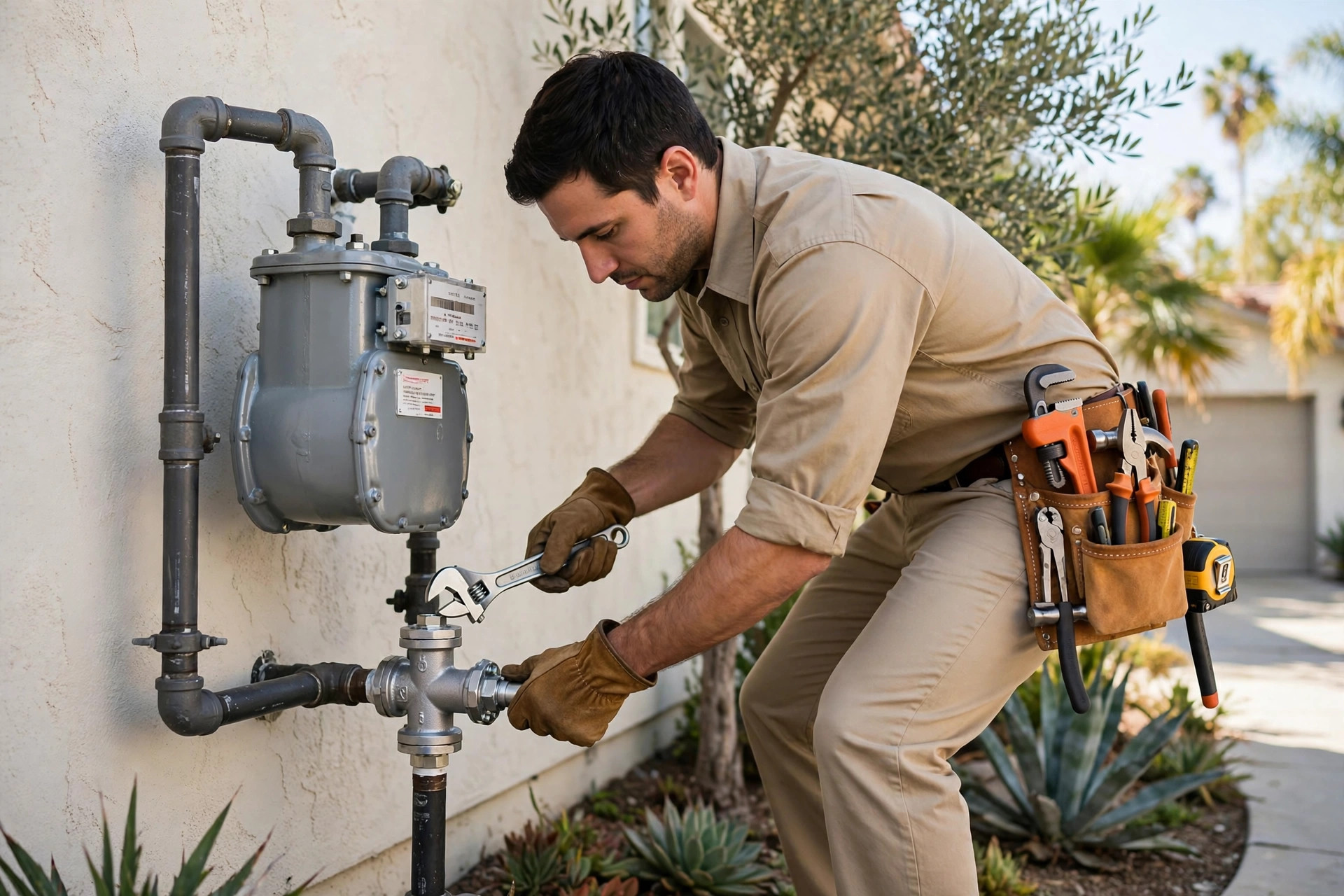
In an earthquake, a broken gas line is a fire risk and a toppled water heater is a flood risk. Two simple devices reduce both risks, and many Los Angeles homes still lack one or both.
What an earthquake gas shutoff valve does
An earthquake gas shutoff valve sits on the gas line, usually at the meter, and it is designed to stop gas flow when shaking reaches a set threshold. Most residential valves are manual-reset, which means they close automatically in a strong quake and stay closed until a person resets them. That design matters. It prevents gas from flowing into a broken line while no one is home or while the house is unsafe to enter, and it avoids an automatic restart into a damaged system. After a quake, the valve should be reset only after the gas system has been checked for damage, because resetting into a broken line defeats the purpose of the valve.
Why seismic straps are not optional in California
California code requires seismic straps for water heaters, and for good reason. A water heater is a tall, heavy tank full of water, sitting on a platform or a floor, connected to gas, water, and sometimes electricity. In an earthquake it can tip, slide, or fall, breaking a gas line, a water line, or both. Straps hold the tank to a wall stud or a solid structure at two points, top and bottom, so it stays upright when the ground moves. They are cheap, they are simple, and they are easy to check. Yet many older heaters in Los Angeles still have a single loose strap, a strap anchored to drywall instead of a stud, or no strap at all.
Straps work with other safety steps, not alone. A flexible gas connector allows movement without breaking, a pressure-reducing valve protects the tank from hillside pressure over 80 PSI, and a properly routed drain line prevents a leak from becoming a flood. A heater inspection should check all of these together, because a heater that is strapped but connected with a rigid gas line, or strapped to drywall, is still at risk. If your heater was installed before current strap rules, or if you cannot see two solid straps, that is a reason to have it checked, not a reason to assume it is safe.
What to check in your own home
Start at the gas meter. Look for a shutoff valve on the gas line and ask whether it is an earthquake valve or a manual shutoff only. A manual shutoff requires a person to turn it off, which is not possible if no one is home or if the area is unsafe. An earthquake valve closes on its own. Next, look at the water heater. You should see two straps, one in the upper third and one in the lower third, anchored to studs or masonry, not just to drywall. Check that the straps are tight and that the tank does not rock when pushed gently. If you smell gas, ventilate, avoid switches and flames, and shut off gas only if you can do so safely. Do not relight a pilot or reset a valve until the system has been checked.
After an earthquake, do not assume gas is safe because you cannot smell it. Gas can leak from a line that is not visible, and a shutoff valve that has closed is telling you something. Keep a wrench near the meter if you have a manual shutoff, know where the valve is, and make sure everyone in the household knows not to reset an earthquake valve until a professional has checked the system. These steps take minutes to learn and can prevent a fire in the hours after a quake, when emergency services are stretched and a small leak can become a major incident.
Frequently asked questions
Does an earthquake valve shut off gas in every tremor?
No. It is designed to close at a set shaking threshold, so minor tremors should not trigger it. A valve that trips too easily may be the wrong size or type for the home.
Can I reset an earthquake valve myself after a quake?
Only after the gas system has been checked for damage. Resetting into a broken line can release gas into a damaged home, so a professional check comes first.
Are seismic straps required for tankless heaters too?
Tankless units are wall-mounted and have their own mounting and safety requirements, but the principle is the same: the unit must stay secured in an earthquake. Check the manufacturer's mounting rules and local code.
Related service
Call Los Angeles Plumbing Pros
If you are seeing the signs in this post, describe what you see, where it is, and when it started. A technician will talk through the next step before any work starts.