
Earthquake Gas Shutoff Valve Installation in Los Angeles: How Seismic Valves Protect Your Home
Los Angeles Plumbing Pros Blog — 30 Oct 2026
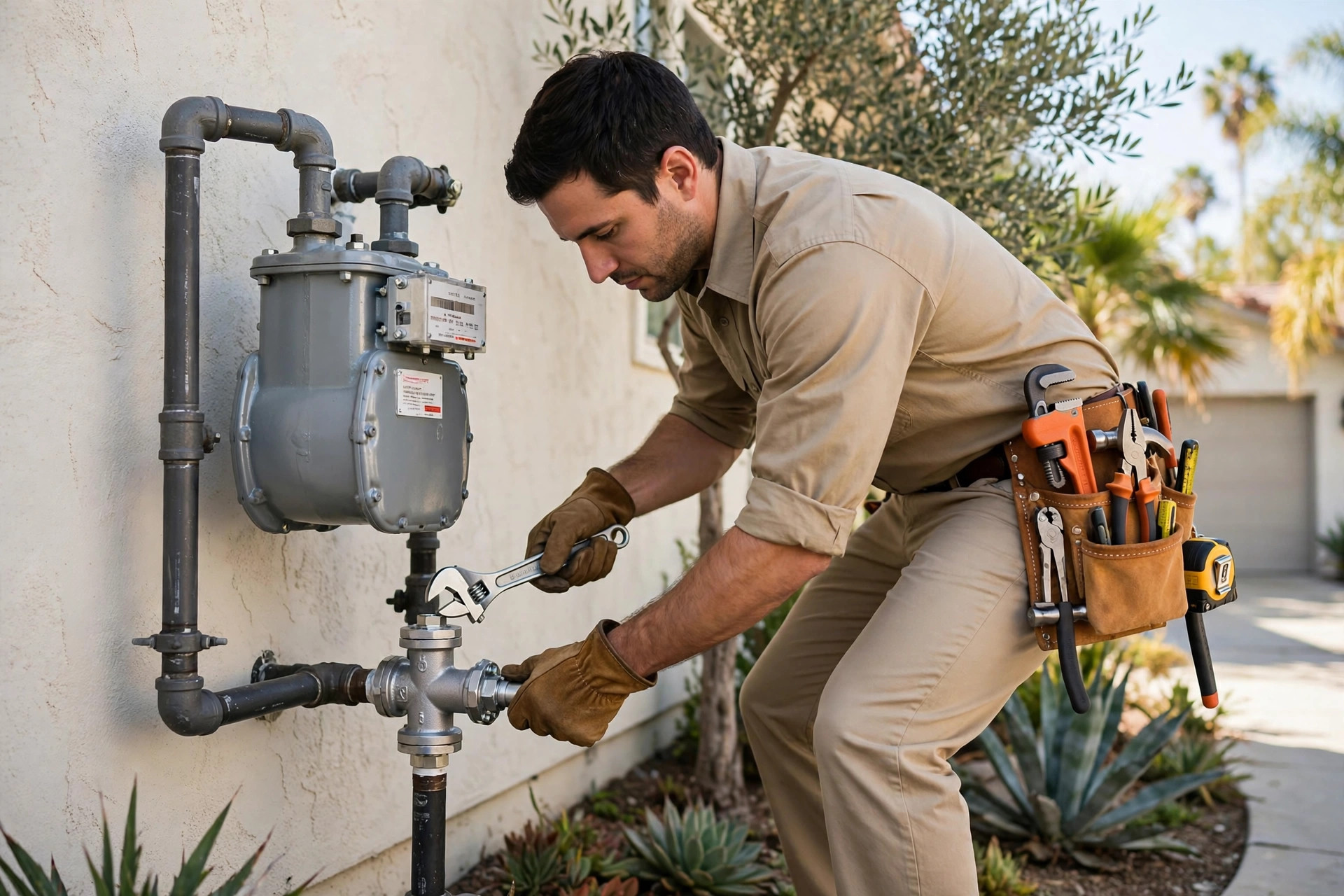
Los Angeles sits on ground that can move without much warning, and a gas line that is fine on a quiet day can become a serious hazard in the seconds after a shake. An earthquake gas shutoff valve is a device fitted on the gas supply, usually at or near the meter, that is designed to stop the flow of gas when it senses strong shaking or, in some designs, a sudden surge of gas that suggests a broken line. For many Los Angeles homeowners, it is not about a single dramatic earthquake. It is about the ordinary risk that follows one: a water heater that has shifted, a rigid pipe joint that has cracked, a stove connection that has pulled loose, and gas escaping into a garage, a kitchen, or a shared wall cavity while everyone is still trying to work out what just happened.
This post explains how these valves work in real Los Angeles homes, which houses benefit most, what a tripped valve looks like room by room, how a technician diagnoses a gas system after a shake or before an installation, and what choices you actually have between valve types.
How an earthquake gas shutoff valve works in a Los Angeles home
Most seismic shutoff valves work on a simple mechanical idea. Inside the valve there is a ball, a pendulum, or a similar sensing element that stays in place during normal vibration from traffic, a closing door, or a washing machine spin cycle. When shaking reaches a preset strength, that element moves out of its seat and blocks the gas passage. Once it trips, gas to the house stops until someone resets the valve and relights the affected appliances. That pause is the point.
Excess-flow valves work a little differently. Rather than sensing shaking itself, they sense a sudden, abnormal increase in gas flow, which is what happens when a pipe breaks downstream. Some Los Angeles installations use one type, some use the other, and some combine them. A motion-sensing valve at the meter protects the whole house after a quake, while an excess-flow device can also respond to a break caused by something else, such as construction damage or a failed connector. Placement matters as much as the device. The valve is normally installed on the gas line serving the home, in an accessible spot where it can be inspected and reset, and where it does not block access to the meter itself. After installation, every gas appliance that was shut down, including the water heater, furnace, stove, and dryer, needs to be checked and relit in the correct sequence, because a valve that trips and is simply reset without that check has not finished its job.
Why Los Angeles housing makes this decision different
Los Angeles is not one housing type. A 1920s Craftsman in Highland Park, a post-war stucco home in the San Fernando Valley, a hillside house above the canyon roads, and a 1960s apartment building in Culver City can all have gas, but they do not have the same gas system. Older homes, including many built between 1948 and 1965, often still have sections of older piping, rigid connectors, and water heaters that predate modern flexible connections. Those systems were not built with the same movement in mind, and a joint that has already seen decades of expansion, contraction, and minor settlement is more likely to fail when the ground moves.
Hillside homes add another layer. Longer gas runs, changes in elevation, and pressure differences across a property mean a break is not always at the meter or at the appliance. It can be somewhere along a run that is difficult to see, especially where a line passes through a garage, a retaining wall area, or a crawl space. Homes on steep lots in the Hollywood Hills, Pacific Palisades, and the foothill edges of Pasadena and Glendale also face the practical problem of access after a quake, when roads may be closed and a homeowner may not be able to get a technician to the property quickly. In older apartments and duplexes in Santa Monica and Culver City, shared walls and shared utility areas mean a gas problem in one unit, or in a common laundry or water heater closet, can affect neighbours who did not cause it and may not know it has happened. That shared risk is one reason building owners often think about whole-building protection rather than a single appliance fix.
Signs by room and area that gas protection matters
In the kitchen, the signs are usually tied to the stove and oven. A burner that will not light after a shake, a pilot that keeps going out, or a faint gas smell near the range after the ground has moved should never be treated as a nuisance. In a garage or utility closet, the water heater tells its own story. A heater that has shifted on its pad, straps that look loose or pulled away from the wall, a gas connector that is kinked or stretched, or a pilot that is out after a tremor all point to movement in the gas system, even if there is no obvious leak. A tripped seismic valve itself is a sign: if the house has no gas at all after an earthquake while neighbours still have service, the valve may have done exactly what it was installed to do.
Outside, at the meter, look for a valve handle or indicator in the tripped position, a meter that has moved on its mounting, or piping that looks bent where it enters the house. In a laundry room, a dryer that will not heat or a gas smell near the dryer connection deserves the same caution as a kitchen problem. In older apartments, pay attention to common areas as well, because a shared water heater closet or a basement meter room can hide a problem that no single tenant can see from inside their unit. None of these signs proves a leak on their own, and a valve that has not tripped does not prove the system is undamaged. That is why the right response to a strong shake is a careful check of the whole system, not just the appliance that stopped working first.
Diagnosis steps before a valve is fitted or reset
A proper diagnosis starts before any tool is picked up. The technician will ask when the shaking happened, how strong it felt, whether any appliance stopped working, whether anyone smelled gas, and whether the valve, if one is already fitted, is in the tripped position. That history matters because a small tremor that trips a sensitive valve and a large quake that shifts a water heater are different situations, even if both end with no gas in the house. Next comes a walk of the system from the meter to each appliance, checking the meter mounting, the main shutoff, visible piping, connectors, and the condition of straps and supports, especially at the water heater, which is both heavy and commonly damaged in a quake.
From there, the check becomes more specific. Gas lines are tested for leaks and pressure, connectors are inspected for age, corrosion, and flexibility, and each appliance is checked for proper venting and pilot operation. In Los Angeles homes with older galvanized or mixed piping from the 1948 to 1965 era, the technician will also look for rust, thinning, and previous repairs that could weaken a joint under movement. If a leak is found, the priority is to keep gas off that section until it is repaired, not to reset a seismic valve and hope the problem clears. A diagnosis that ends with a clean test, a documented valve position, and a relight of each appliance in turn is very different from a quick reset, and the difference is the safety margin the valve was meant to provide.
Valve options and the trade-offs between them
The most common choice is between a motion-sensing seismic valve and an excess-flow valve, and the trade-off is about what each one can detect. A motion-sensing valve responds to shaking itself, so it can shut off gas even if no pipe has broken yet, which is useful when a water heater has shifted or a connector has been stressed but has not yet failed completely. Its drawback is that it can trip in a moderate quake even when the gas system is intact, which means a house can lose hot water, heating, and cooking until the valve is reset and appliances are relit. An excess-flow valve, by contrast, is less likely to trip unnecessarily, but it will not shut off gas after shaking alone if flow stays within its normal range, so it is better understood as protection against a break than as earthquake protection on its own.
Other trade-offs are practical. Valve size must match the gas load of the house, because a valve that is too small can restrict flow to a large home with a tankless water heater, a furnace, a range, and a dryer running at once, while an oversized valve may not respond as intended. Location affects both protection and convenience: a valve at the meter protects everything downstream, but it also means a trip shuts off the whole house, whereas a valve on a single appliance line protects only that appliance. Cost, access for future resets, and whether the existing meter piping needs to be reworked to fit the valve all affect the final choice.
What to check before calling Los Angeles Plumbing Pros
Before calling, gather the facts that make a visit faster and safer, but do not take risks to get them. If you smell gas strongly, hear hissing near a gas line, or feel unwell, leave the property and call for help from outside rather than searching for the source. If there is no strong smell and you are checking after a quake, note whether the whole house or only one appliance has lost gas, whether the water heater pilot is out, whether the heater has moved, and whether you can see a seismic valve indicator in the tripped position. Do not reset a tripped valve repeatedly, and do not relight appliances one by one without checking the system, because a valve that keeps tripping may be responding to a real problem.
It also helps to know where the meter is, whether access to it is blocked by a gate, a parked car, or stored items in a garage, and how many gas appliances the home has. In an older apartment in Santa Monica or Culver City, note whether other units have gas, whether a shared laundry or water heater closet is involved, and who controls access to the meter room. A short, clear description — what shook, what stopped working, what you smell, and what you can see at the meter — lets a technician arrive with the right plan instead of spending the first part of the visit reconstructing it.
Prevention and maintenance for seismic and pressure risks in Los Angeles
A shutoff valve is not a fit-and-forget device. It needs to stay accessible, its indicator needs to be readable, and the piping around it needs to be checked for corrosion, especially in coastal areas such as Santa Monica and Long Beach where salt air accelerates wear on exposed metal, and in older homes where galvanized piping from the mid-twentieth century may already be thinning. Water heater seismic straps should be checked at the same time, because a valve that shuts off gas does not stop a heavy, unstrapped heater from falling and breaking a water line or a gas connector. Flexible gas connectors, where appropriate, allow a little movement without snapping a rigid joint, and they should be inspected for age and kinking whenever an appliance is moved for cleaning or renovation.
Maintenance also means thinking about the rest of the system that a quake affects. Hillside pressure over 80 PSI, which is common in parts of Los Angeles where elevation changes push municipal pressure higher, can stress joints, appliance valves, and water heater relief systems over time, so a pressure check belongs in the same visit as a seismic check, even though pressure and shaking are different problems. Hard water, at 200 to 400-plus parts per million in much of Los Angeles and over 12 grains per gallon in Glendale, does not directly trip a gas valve, but scale inside a water heater can mask other problems, make a heater run hotter, and shorten its life, which is why a heater that is already struggling with scale deserves attention before a quake adds movement to the mix. Keeping the meter area clear, knowing how to read the valve indicator, and having a household plan for what to do after a shake — who checks the heater, who checks the meter, and when to leave and call — are the low-cost habits that make the hardware useful.
City-by-city notes across Los Angeles
In central Los Angeles, the mix is often older single-family homes and apartment buildings with gas systems that have been altered piecemeal over decades, so a valve installation may first reveal a connector or a section of piping that needs attention before the valve itself can be fitted cleanly. In Glendale and Burbank, foothill and valley homes combine very hard water, older housing stock, and hillside elevation changes, so a visit often covers seismic protection, water heater condition, and pressure in one conversation. Pasadena shares the foothill pattern, with larger older homes, long gas runs to detached garages and accessory units, and water heaters tucked into garages where movement is easy to miss until a pilot goes out.
Santa Monica and Culver City deserve special attention because of older apartments, shared walls, and common utility spaces. A gas issue there is rarely just one household's problem, and access, communication with neighbours, and a whole-building view of the meter and water heater closets matter as much as the valve choice. Long Beach and Torrance, with coastal exposure and a large stock of post-war homes, often combine corrosion on exposed piping with older interior systems, so an outdoor meter and valve need a corrosion check as well as a seismic check. The valve is the same idea everywhere, but the house around it changes what a good installation looks like.
Frequently asked questions
Will an earthquake valve shut off my gas during a small tremor?
It depends on the valve's sensitivity and the strength of shaking at your house. A valve is designed to ignore everyday vibration but trip during strong shaking. A moderate quake can trip it even if your pipes are intact, which is why a trip should be followed by a system check and a careful relight, not just a reset.
Does a seismic valve replace seismic straps on my water heater?
No. A valve stops gas flow, but it does not hold a water heater in place. Straps keep a heavy heater from falling, breaking water and gas connections, and causing damage on its own. The two work together, and a complete seismic check should look at both.
Can I reset a tripped earthquake valve myself?
Some valves have a homeowner reset procedure, but resetting without checking for leaks, heater movement, and damaged connectors can hide a real problem. If you smell gas, hear hissing, or see damage, leave the property and get help from outside instead of attempting a reset.
What happens to my appliances after the valve trips?
All gas appliances downstream of the valve lose supply, so water heater pilots go out, furnaces stop, and stoves and dryers stop working. Each appliance needs to be checked and relit in the correct order after the gas system has been tested, rather than all at once.
Is a motion-sensing valve or an excess-flow valve better for a hillside home?
For a hillside home, motion sensing at the meter is often the starting point because it responds to shaking before a break is confirmed, and long gas runs make a break harder to locate quickly. An excess-flow device can be a useful addition where a break is the main concern, and the best choice depends on your gas load, piping layout, and access.
How often should a seismic valve and gas system be checked in Los Angeles?
A visual check of access, indicator, straps, and visible piping is worth doing at least once a year, and a fuller check is sensible after any strong quake, after renovation work near gas lines, or when an appliance is replaced. Coastal corrosion, older galvanized piping, and hillside pressure all make regular checks more valuable, not less.
Related service
Call Los Angeles Plumbing Pros
If your valve has tripped, your water heater has moved, or you are thinking about seismic protection before the next quake, describe what you see at the meter, which appliances have stopped working, and when the shaking happened. A technician will talk through the next step before any work starts.