
Drain Cleaning in Los Angeles: Slow Drains, Grease, Roots and Hard-Water Scale
Los Angeles Plumbing Pros Blog — 30 Oct 2026
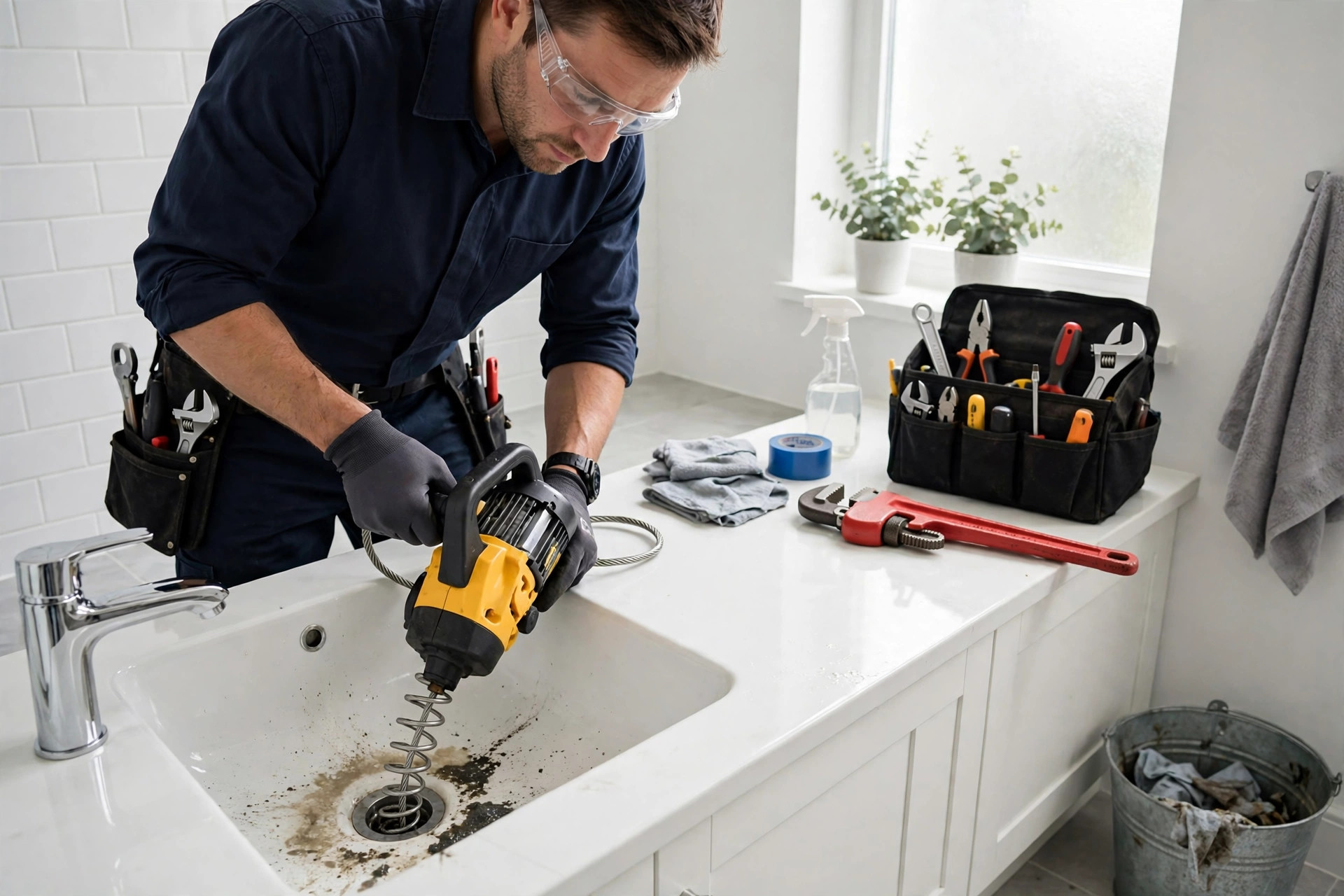
A slow drain in Los Angeles is easy to ignore until it stops being slow. The bathroom sink that takes an extra minute to empty, the kitchen drain that gurgles after the dishwasher runs, the shower that leaves you standing in an inch of water, and the toilet that needs a second flush are all early signals, and they rarely improve on their own. Drain cleaning is not just about restoring flow for a day. Done properly, it identifies what is narrowing the pipe, removes it without damaging an already old line, and leaves a plan for keeping it clear.
Los Angeles drains face a combination that few other cities match in quite the same way. Hard water measuring 200 to 400-plus parts per million leaves scale inside pipes and traps. Older homes still drain through clay and cast-iron laterals that crack, offset and invite roots. Mature oak, sycamore and pepper trees grow over those laterals, searching for moisture. Kitchens in a city that cooks at home, entertains often and runs dishwashers daily send grease, food and detergent down the same lines. Add winter rain, hillside lots and slab construction, and a simple clog becomes a system story.
This post explains how drain cleaning works in Los Angeles homes, what causes slow drains in each part of the house, how a technician diagnoses a blockage versus a damaged pipe, what cleaning methods suit different situations, and how to prevent the next clog without harming pipes that may already be fragile.
How drain cleaning works in Los Angeles homes
Drain cleaning begins with finding where the blockage actually sits, because the location decides the method. A clog in a single sink trap is a local problem, often hair, soap and scale in the trap and the first few feet of pipe. A clog that affects a whole bathroom group, or a kitchen and a laundry together, sits further downstream, where branch lines join. A clog that backs up multiple fixtures at once, or sends sewage to the lowest drain in the house, sits in the main line or lateral, and that is a different job with different tools and different risks.
The basic methods follow that logic. A hand auger or small drum machine clears a sink, tub or toilet trap and the nearby branch. A larger cable machine reaches further into branch and main lines, using a cutting head sized to the pipe so it clears roots and buildup without gouging the wall. Hydro jetting uses high-pressure water to scour the full circumference of a pipe, which is useful for grease and scale that a cable only punches a hole through. A camera inspection, before or after cleaning, shows whether the pipe is sound, cracked, bellied or root-damaged, which decides whether cleaning alone is enough.
In Los Angeles, access shapes the work as much as the clog. Raised-foundation Craftsman homes often have cleanouts in a crawlspace or at the side of the house, while slab homes in Torrance may have cleanouts near an exterior wall or in a garage, and older homes may have no convenient cleanout at all. A technician may need to pull a toilet, work through a roof vent, or use a cleanout that has not been opened in years. Good drain work protects flooring and finishes during that access, contains water and debris, and leaves the access point usable for the next visit, because a home with root-prone laterals will need it again.
Los Angeles causes and housing types behind slow drains
Grease is the most common kitchen cause, and Los Angeles cooking makes it worse in a specific way. Fats, oils and cooking grease go down the drain as liquid and solidify as they cool in the pipe, coating the wall and catching food particles, coffee grounds and detergent residue. Over time that coating narrows a kitchen line from the inside, so water drains slowly even when no single object blocks it. A cable can punch through grease, but the coating often remains, which is why a greasy kitchen line that has been snaked repeatedly may need jetting to scour the wall clean.
Bathrooms collect a different mix. Hair, soap scum and hard-water scale build in tub and shower traps and in the first bends of the branch line, while toothpaste, shaving residue and cleaning products add to the layer. In hard-water areas, scale also forms on the inside of the trap and on the drain assembly itself, so a shower drain that is cleaned of hair but not descaled may still run slowly. Toilets add their own risks: wipes marketed as flushable, sanitary products, cotton and excessive paper do not break down the way toilet paper does, and in an older cast-iron line with a rough interior they catch and accumulate.
Housing age changes the pipe itself. Clay laterals, common in older Los Angeles homes, join in short sections with joints that shift, crack and admit roots. Cast-iron drains corrode and scale from the inside, narrowing the bore and creating a rough surface that catches debris. Homes built between 1948 and 1965 often combine galvanized supply problems with aging drain materials, so a house with slow drains may also have low supply pressure, and both point to a system reaching the end of its first life. Newer homes are not immune, especially where a lateral was laid with poor grade, a belly where water pools, or a joint damaged during construction or landscaping.
Signs by room and area: reading a slow drain
A kitchen sink that drains slowly only after a large meal, or gurgles when the dishwasher discharges, usually points to a greasy branch line rather than a main-line failure. If the sink backs up into the dishwasher, or water appears in the other bowl of a double sink, the blockage is downstream of the junction between them. A garbage disposal that hums, jams or drains slowly may be a disposal problem, a trap problem, or a branch problem, and running more water through a jammed disposal rarely helps. Noting whether hot water temporarily improves flow can also help, because heat softens grease even though it does not remove it.
In a bathroom, the pattern across fixtures tells the story. A single slow sink is likely a trap issue, while a slow tub and a slow toilet in the same bathroom point to their shared branch. A toilet that bubbles when the tub drains, or a tub that fills when the toilet flushes, signals air and water being pushed through a partly blocked shared line. A shower that drains slowly from the start of a shower, rather than only at the end, suggests a trap or branch already narrowed by hair and scale, while a shower that suddenly floods suggests a blockage further downstream that has finally closed the pipe.
Laundry rooms and floor drains reveal main-line trouble earlier than other rooms because they sit low. A washing machine that causes a toilet to gurgle, a floor drain that overflows during a wash cycle, or a utility sink that backs up when the dishwasher runs all suggest a shared or main line that cannot handle a high-volume discharge. In slab homes in Torrance, a floor drain backup may be the first visible sign of a main-line problem, because there is no crawlspace for water to hide in. In raised homes, the same problem may first appear as damp soil or a smell under the house.
Diagnosis steps: clog, scale, roots or damaged pipe
Diagnosis starts with a fixture map. A technician will ask which fixtures are slow, which back up into which, whether the problem is constant or intermittent, and whether it worsens with rain or with high-volume use such as laundry. That map separates a local trap clog from a branch clog and from a main-line clog, and it prevents the common mistake of clearing a sink trap when the real blockage is twenty feet downstream. A simple test, running one fixture at a time and watching others, often confirms the map before any tool is used.
Cable work itself is diagnostic. The resistance felt, the material brought back on the head, and the distance at which the blockage is met all give clues. Grease comes back as a soft, dark coating, roots as fibrous strands, scale as hard flakes, and a hard stop that will not pass may be a collapsed section, a severe offset, or a foreign object. A technician who notes distance and material can target the next step, whether that is a different head, jetting, or a camera, rather than repeatedly running the same cable through the same spot.
A camera inspection is the step that turns cleaning into a plan. Run through a cleanout after flow is restored, a camera shows the pipe material, joint condition, root entry points, bellies, cracks and the exact distance of each defect from the access point. That footage matters for older clay and cast-iron laterals, where cleaning roots without repairing the entry joint guarantees recurrence, and for a line with a belly, where no amount of cleaning restores proper grade. A camera also protects the homeowner from unnecessary work, because a sound pipe with a simple grease clog needs a different recommendation from a cracked lateral.
Cleaning options and their trade-offs
A hand auger is the right tool for a local trap or a short branch clog. It is inexpensive, low-risk and effective for hair and small obstructions close to the fixture, but it cannot reach a main line and cannot scour grease from a long kitchen run. A drum or sectional cable machine extends that reach and can cut roots, but the head must match the pipe diameter and material. An oversized or aggressive head in a fragile clay or corroded cast-iron line can break a joint or punch through a weakened wall, turning a cleaning job into a repair job.
Hydro jetting is the strongest cleaning option for grease, scale and fine roots, because water scours the full pipe circumference rather than cutting a single channel. It is particularly useful in Los Angeles kitchen lines coated with grease and in lines with hard-water scale, where a cable leaves a rough wall that reclogs quickly. Jetting is not, however, a universal answer. In a collapsed, severely cracked or badly bellied pipe, high-pressure water can worsen damage or simply flow around a structural problem without fixing it, so a camera check before jetting a suspect older lateral is prudent.
Chemical drain cleaners deserve caution in Los Angeles homes. Caustic products can damage older pipes, harm septic or lateral joints, and create a hazard for the technician who later opens the line, because the chemical remains in standing water. Enzyme or bacterial products are gentler but slow, and they do not clear a solid root mat or a grease blockage that has already closed a pipe. Mechanical cleaning, followed by a camera where appropriate, is safer and more informative than repeated chemical attempts, especially in homes with clay or cast-iron drains.
What to check before calling
Before calling, identify the pattern. Note which fixtures are slow, whether the problem is new or gradual, whether it follows rain or laundry, and whether plunging helps temporarily. A plunger can clear a toilet trap clog, but it will not clear a main-line root mat, and aggressive plunging on a sewage backup can push waste into other fixtures. If sewage is present, stop using drains and toilets, keep the area clear, and avoid chemical cleaners, because a technician will need to open the line and chemicals make that work hazardous.
Check for simple local causes without dismantling anything you are unsure about. A sink strainer full of food, a shower drain cover clogged with hair, or a disposal jammed by a foreign object can mimic a deeper blockage. Clear those visible items, run water briefly, and see whether flow improves. Do not remove a trap or open a cleanout yourself if you are not confident about resealing it, because an open cleanout or a poorly seated trap can leak sewage or sewer gas into the home. Note the location of cleanouts if you know them, because that saves time on arrival.
Gather context about the house that a technician will ask for. The age of the home, the presence of mature trees over the yard, any previous drain cleaning or camera work, and whether neighbours have similar problems all help. If a previous cleaning report mentioned roots, a belly or a cracked section, have that information ready, because it changes the plan from a routine cleaning to a targeted inspection. Photographs of a backing-up drain, a cleanout location or a soggy yard strip are useful, and a short timeline of when the problem started and how it has changed is more valuable than a long description of a single incident.
Prevention and maintenance for Los Angeles conditions
Kitchen habits have the largest effect on drain life in Los Angeles. Grease should go into a container for disposal, not down the sink, even in small amounts, because small amounts accumulate. Food scraps, coffee grounds and fibrous vegetables should not be treated as disposal-safe in an older line, and running cold water during disposal use helps move waste without melting grease further down the pipe where it will resolidify. A kitchen line in a hard-water home also benefits from periodic professional cleaning, because scale and grease together form a particularly stubborn coating that household methods rarely remove fully.
Bathroom maintenance is simpler but just as important. Hair catchers in showers and tubs, regular cleaning of drain covers, and avoiding wipes, cotton and sanitary products in toilets reduce the load on traps and branches. In hard-water areas, descaling fixtures and checking aerators and showerheads for white buildup gives an early warning that scale is also forming inside traps and pipes. A tub that is slow once a year is a maintenance signal, not a nuisance to live with, because the same buildup that slows a tub today will slow its branch tomorrow.
For homes with mature trees, prevention is scheduled rather than reactive. A camera inspection every few years, or after a root cleaning, shows whether roots are returning, whether a joint has worsened, and whether a spot repair or lining would stop the cycle. Keeping cleanouts accessible, avoiding planting new large trees directly over a lateral, and addressing a slow main line before winter rain are all part of that schedule. In slab homes, where access is limited, keeping a record of cleanout locations and previous camera distances makes each future visit faster and less disruptive.
City-by-city notes across Los Angeles
Pasadena and Glendale show the hard-water and older-housing combination most clearly. Craftsman and early twentieth-century homes with clay and cast-iron laterals, combined with hardness at the high end of the Los Angeles range, produce drains that scale, corrode and root in the same run. A drain cleaning visit in these neighbourhoods should therefore include a camera conversation, because clearing a clog without checking the pipe leaves the next clog already forming at the next cracked joint or scaled section.
Torrance and the South Bay bring slab construction to the foreground. With pipes beneath concrete, a main-line problem often appears first at a low floor drain or as a backup in a bathroom furthest from the street, and access through an exterior cleanout becomes critical. Torrance slab homes with mature landscaping also combine root risk with limited access, so a precise camera location, measured from a known cleanout, matters more than in a raised home where a crawlspace offers alternative access points.
Long Beach, Santa Monica and the coastal flats add groundwater and multi-unit complexity. Older apartment buildings share drains and laterals, so a blockage in one unit can back up into another, and coordination with neighbours and building management becomes part of the diagnosis. High groundwater after winter rain can enter cracked laterals and overload a system that drains normally in dry months, so a coastal drain that only fails in wet weather should be investigated as a lateral problem, not dismissed as a seasonal quirk.
Frequently asked questions
Why does my Los Angeles drain keep clogging after it was just cleaned?
Repeated clogs usually mean cleaning removed the blockage but not the cause, such as grease coating the pipe wall, roots entering through a cracked joint, or a belly holding sediment. A camera inspection after cleaning shows which of these is present and what repair or maintenance will break the cycle.
Is hydro jetting safe for older clay or cast-iron pipes?
Jetting is effective for grease and scale, but it should follow a camera check in older or suspect lines. A sound pipe tolerates jetting well, while a collapsed or severely cracked section needs repair first, because high-pressure water will not restore a structurally failed pipe.
Do chemical drain cleaners help in a hard-water home?
They rarely solve a real Los Angeles drain problem and can damage older pipes and create hazards for later work. Grease, scale and root mats need mechanical cleaning, and a camera where the problem recurs, rather than repeated chemical attempts.
How often should a home with mature trees have its drains checked?
A camera inspection every few years is a practical schedule for a home with oak, sycamore or pepper trees over the lateral, or sooner if drains slow, gurgle, or back up after rain. The footage tracks whether roots are returning and whether a joint is worsening.
Related service
Call Los Angeles Plumbing Pros
If you are seeing the signs in this post, describe what you see, where it is, and when it started. A technician will talk through the next step before any work starts.